




Interior Minister Mohsin Naqvi on Tuesday alleged that India is attempting to sabotage the Indus Waters Treaty under the pretext of the recent Pahalgam false flag incident, warning that such actions pose a serious threat to regional peace and Pakistan’s water security.
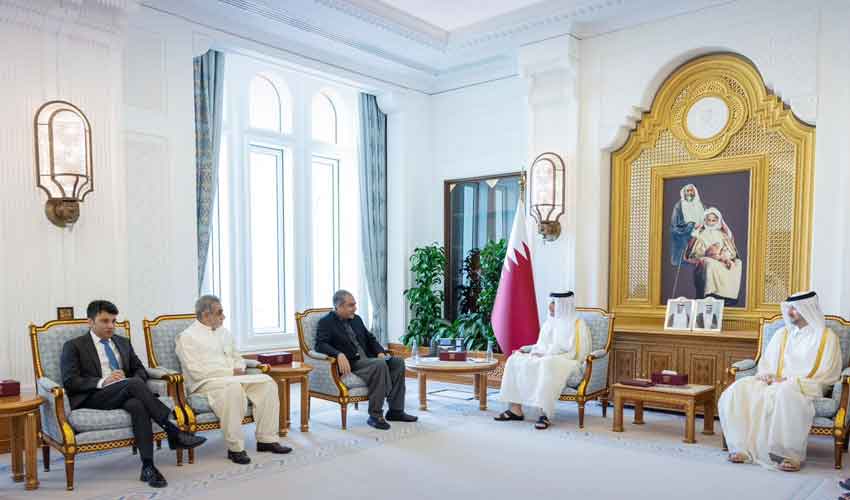
During a meeting with Qatari Prime Minister Sheikh Mohammed bin Abdulrahman Al Thani, Minister Naqvi discussed the escalating Pakistan-India tensions, bilateral cooperation, and the broader regional situation.
The high-level engagement focused on Pakistan’s concerns over India’s narrative following the Pahalgam incident, which New Delhi has used to level baseless allegations against Islamabad as well as Pakistan's comprehensive steps for peace in the region.
“India has attacked the Indus Waters Treaty, which is a lifeline for us, under the guise of the Pahalgam incident,” Naqvi told the Qatari leader, briefing him on Pakistan's firm and principled stance on Indo-Pak tension. “Pakistan seeks lasting peace in the region but will not remain silent in the face of aggression.”
The interior minister reiterated Pakistan’s demand for an impartial investigation into the Pahalgam incident, asserting that such a move would expose the real masterminds and beneficiaries of the attack. “Our offer for a fair probe only strengthens Pakistan’s principled position,” he added.
The Qatari prime minister expressed concern over rising tensions, urging all parties to pursue diplomatic efforts for de-escalation. He emphasized the importance of maintaining peace in South Asia and conveyed a message of goodwill to Prime Minister Shehbaz Sharif, acknowledging his efforts in steering Pakistan’s economy in the right direction.
“We support a policy of non-confrontation and hope that dialogue and diplomacy will help ease regional tensions,” said Prime Minister Al Thani.
Mohsin Naqvi also briefed the Qatari leadership on Pakistan’s peace-building measures and highlighted Islamabad’s commitment to regional stability. He stressed that India’s actions threaten not just bilateral relations but the broader peace architecture in South Asia.