




The Ministry of States and Frontier Regions (SAFRON) has directed authorities across Pakistan to immediately stop any action against Afghan refugees holding valid Proof of Registration (PoR) cards, as the government considers extending the repatriation timeline.
In an official communication, SAFRON has written to the governments of all four provinces, as well as administrations in Azad Jammu and Kashmir and Gilgit-Baltistan, urging them to hold off on any measures targeting PoR cardholders.
The ministry has also issued specific instructions to senior officials and police chiefs in Islamabad, AJK, and GB, reiterating that registered Afghan refugees should not be subjected to harassment or detention.
According to the letter’s contents, the period for voluntary repatriation of PoR holders is currently under review, and a formal extension is being considered. Until then, authorities have been instructed to refrain from taking any punitive or deportation-related action against documented Afghan nationals.
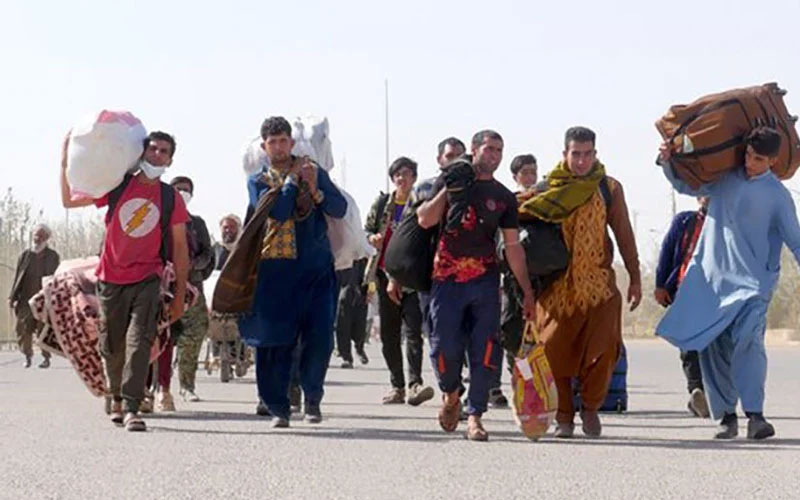
Over 1.3 million Afghan nationals in Pakistan possess PoR cards issued by the United Nations High Commissioner for Refugees (UNHCR) and the Government of Pakistan, providing them temporary legal status.
Also Read: Repatriation deadline ends for Afghan POR card holders
Last week, it was reported that the fate of over 1.4 million Afghan refugees holding Proof of Registration (PoR) cards hung in the balance as the official deadline for their repatriation expired, with the federal cabinet yet to receive a summary for extending their stay.
According to official sources, a proposal was under consideration to extend the stay of Afghan nationals residing in Pakistan under the PoR card scheme by an additional three to six months.
However, despite the urgency, neither the Ministry of States and Frontier Regions (SAFRON) nor the Ministry of Interior has forwarded the summary to the federal cabinet for approval.
Last year, the government had granted a one-year extension to Afghan PoR card-holders, a move widely welcomed by the international community and humanitarian organisations. That extension ended on June 30.
A senior government official, speaking on condition of anonymity, confirmed that deliberations were ongoing, but no formal communication had been made to the cabinet so far. “Time is running out, and without cabinet approval, there is no legal cover to allow them to stay beyond today,” the official said.