





'Cleanliness is half of faith.'
Clean living is not merely a social habit; it is an essential part of our belief system. Our religion teaches us to maintain purity and hygiene in our homes and surroundings.
Within a household, a mother, sister, or daughter plays the most vital role in ensuring cleanliness and order. The beauty and tidiness of a home reflect the refinement and discipline of its residents.
When we extend this concept from a home to a neighbourhood, a city, and ultimately a province, the responsibility shifts to the government -- while citizens remain equally accountable for their own conduct. Whether waste is responsibly disposed of in bins or carelessly thrown in streets and alleys determines the overall cleanliness of society.
However, collecting, transporting, and properly managing waste remains the duty of public institutions. Managing sanitation on a large scale requires significant manpower, advanced machinery, and substantial financial resources.
Punjab, being the most populous province of Pakistan, generates waste in proportion to its vast population. Handling and disposing of such enormous volumes of waste is undoubtedly a complex and demanding task. Although many governments have ruled Punjab in the past, none focused on cleanliness and beautification at the scale currently witnessed under the leadership of Maryam Nawaz.
Today, the Suthra Punjab Program has gained recognition at the global level, primarily because of Maryam Nawaz’s personal leadership and hands-on supervision. Shortly after she assumed office as chief minister, Eid-ul-Adha arrived -- a festival during which animal sacrifices are carried out on a massive scale across Punjab. For the first time, the Punjab government ensured the collection of animal remains not only in major cities but also in smaller towns and rural areas. Roads were washed and treated with rose water. During the three days of Eid, there were no reports of foul odour on the streets. This remarkable achievement brought nationwide appreciation to the Suthra Punjab Program.
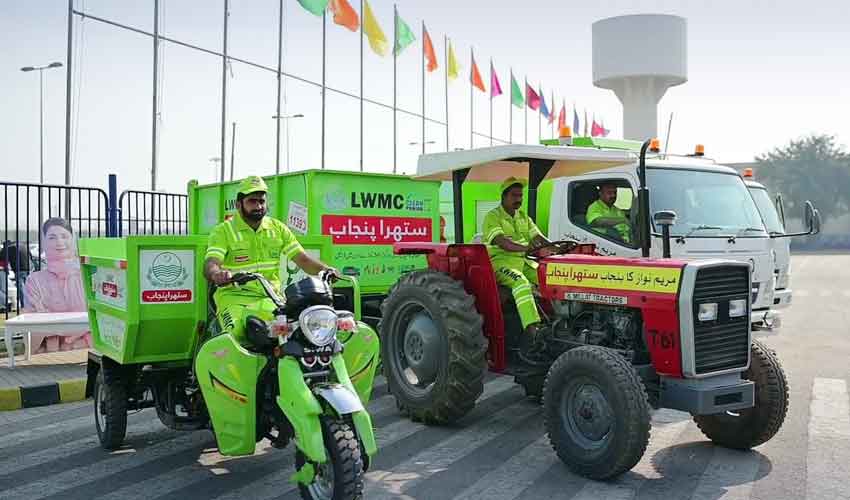
Under Maryam Nawaz’s direction, the program was further expanded. More than 120,000 new jobs have been created under this initiative alone. Currently, 139,413 sanitation workers and 2,418 administrative officers are serving across the province. The program operates with 29,131 vehicles, 286,751 pieces of equipment and machinery, 44,000 waste enclosures, 409 temporary collection points, and 143 landfill sites. Since its inception, sanitation teams have disposed of more than 9.5 million tons of waste.
A dedicated helpline, 1139, has also been introduced. So far, 339,717 complaints have been registered by citizens. Immediate action was taken on 300,493 complaints, while the remaining cases were resolved within a week. Previously, waste management companies operated in only two or three major cities of Punjab. Today, the network has expanded to cover the entire province under a unified system.
This is arguably the world’s largest sanitation network functioning under a single umbrella, ensuring uniform waste management services in every city and village of Punjab. International media outlets such as BBC, Bloomberg, Khaleej Times, and The New York Times have acknowledged and appreciated the performance of this initiative.
Even the city of Birmingham in the United Kingdom has benefited from the Suthra Punjab model -- clear testimony to the program’s success and international relevance.
Maryam Nawaz is transforming Punjab with the same care and dedication with which a daughter maintains her home. Clean and beautiful cities attract foreign tourists and investors alike. Alongside the sanitation drive, model village initiatives and urban beautification projects are progressing successfully, further enhancing Punjab’s global image.
The Suthra Punjab Program continues to expand with each passing day. Its success is evident from the fact that the governments of Khyber Pakhtunkhwa and Sindh have sought detailed briefings from Punjab to replicate the model. Punjab has shared the relevant information openly and generously. Maryam Nawaz has repeatedly stated in her speeches that if any other province seeks feasibility studies or guidance regarding welfare initiatives, Punjab stands ready to assist.
Inspired by her governance style and performance, people in other provinces openly express their wish for leadership similar to Maryam Nawaz. The Suthra Punjab Program stands today not only as a sanitation initiative but as a symbol of administrative efficiency, public service, and visionary leadership.