





Iran’s powerful clerical body has appointed a new supreme leader following a dramatic shift in the country’s leadership.
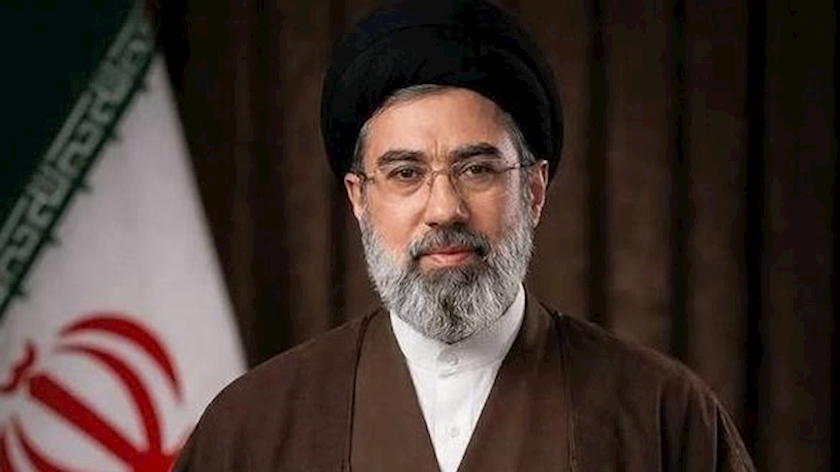
Mojtaba Khamenei has been elected as Iran’s new supreme leader by the Assembly of Experts after the death of his father, Ali Khamenei, in recent U.S. and Israeli attacks, according to Iranian state media.
The 88-member Assembly of Experts, a body responsible for selecting Iran’s supreme leader, voted to appoint Mojtaba Khamenei to the country’s highest political and religious position.
In an official statement issued shortly after midnight in Tehran, the assembly confirmed the decision.
Watch the moment the announcement of Mr. Khamenei as the third leader of the Revolution and the Islamic Republic.
— Iran TV (@QBC_QBC) March 8, 2026
📍 Vanak Square in the capital, Tehran. pic.twitter.com/UcD9gKueXN
The statement said Ayatollah Seyyed Mojtaba Hosseini Khamenei had been chosen as the third supreme leader of the Islamic Republic, following Ruhollah Khomeini and his father, Ali Khamenei.
Leadership role gives final authority
The role of supreme leader holds ultimate authority in Iran’s political system.
The position grants control over key institutions, including the military, judiciary, and major state policies within the Iran.
With his appointment, Mojtaba Khamenei will now have the final say on major national decisions.
Mojtaba Khamenei has long been viewed by political observers as a potential successor to his father.
The cleric has maintained close ties with the powerful Islamic Revolutionary Guard Corps (IRGC), one of Iran’s most influential military and political institutions.
Reports suggest that some circles within Iran’s ruling elite had already considered him a leading candidate for the leadership.
His candidacy was also believed to have support from networks associated with his father’s office and other influential groups within the establishment.
Analysts note that Iran’s revolutionary ideology traditionally discourages hereditary succession.
However, observers say the current circumstances and the backing of key power centers, particularly the Revolutionary Guards, helped pave the way for Mojtaba Khamenei’s appointment.
Leadership change comes amid escalating war
The leadership transition comes during a period of escalating conflict between Iran, the United States, and Israel.
The war began after coordinated U.S. and Israeli strikes targeted Iran more than a week ago, including attacks that killed Ali Khamenei.
According to Iranian officials, the strikes and subsequent fighting have caused significant casualties among civilians.
Iran’s ambassador to the United Nations said the attacks have killed at least 1,332 Iranian civilians and injured thousands.
Oil prices surge
The intensifying conflict has had immediate global economic consequences.
U.S. crude futures surged more than 20 percent, pushing oil prices above $100 per barrel amid concerns about instability in the region.
Meanwhile, the United States has begun reducing diplomatic staff in the Middle East.
Washington ordered the departure of non-emergency employees from its embassy in Saudi Arabia following Iranian strikes on U.S. facilities in the region.
US and Israeli reactions
Donald Trump, the U.S. president, said Washington should have a role in the selection of Iran’s new leader.
“If he doesn't get approval from us, he's not going to last long,” Trump told ABC News before the official announcement.
In comments reported by the Times of Israel after Mojtaba Khamenei was named, Trump declined to elaborate further, saying only, “We’ll see what happens.”
Israel had earlier warned that whoever became Iran’s new leader could become a potential target.
As the conflict entered its ninth day, residents reported heavy strikes around Tehran.
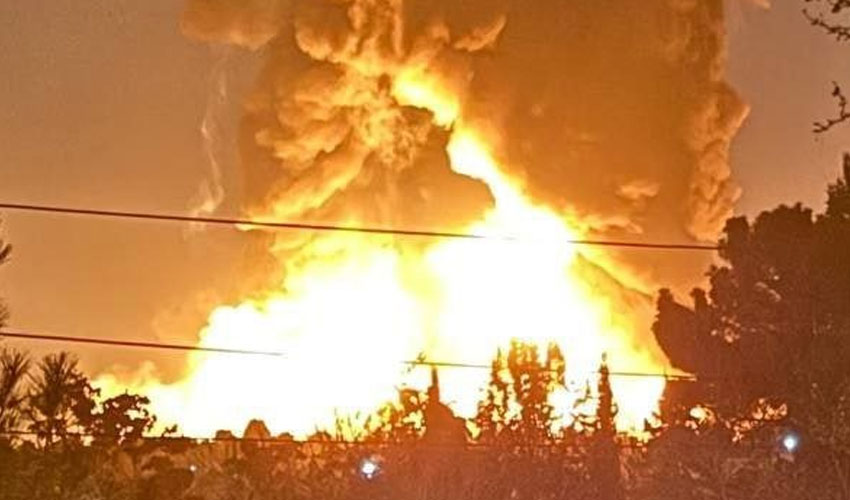
Large plumes of black smoke were seen rising after Israeli attacks targeted major fuel storage facilities near the capital.
Iran’s foreign ministry spokesperson Esmaeil Baghaei described the strikes as a “dangerous new phase” of the conflict and called them a war crime.
Israeli military spokesman Nadav Shoshani said the depots were legitimate military targets used to fuel Iran’s war effort, including missile-related operations.
Netanyahu vows continued assault
Benjamin Netanyahu said Israel would continue its campaign against Iran’s leadership.
“We have an organised plan with many surprises to destabilise the regime and enable change,” the Israeli prime minister said in a video statement.





.jpg)