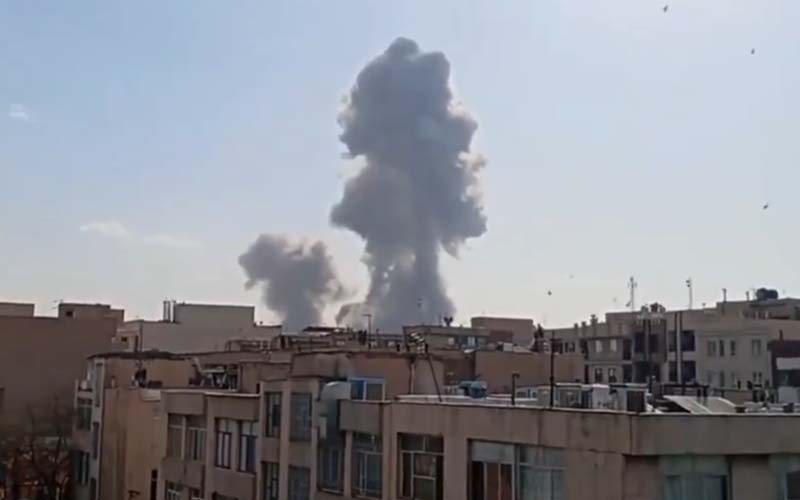





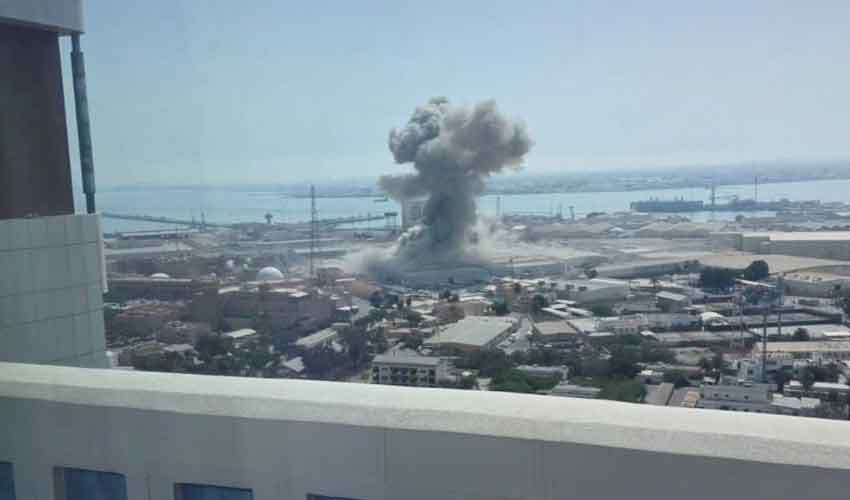
Iran’s Islamic Revolutionary Guard Corps (IRGC) has claimed responsibility for a series of large-scale drone and missile attacks targeting US military facilities in the United Arab Emirates, Bahrain, and Kuwait, marking one of the most dramatic escalations in the ongoing Middle East conflict.
According to Iranian statements, more than 40 American service members were killed and over 70 injured in a strike on a US military gathering in Dubai alone.
In an official statement carried by Trend, the IRGC said its naval combat units launched a combined drone and missile assault on a US military assembly point in Dubai, where more than 160 US Marines were reportedly present.
The attack allegedly killed more than 40 American soldiers and wounded over 70 others.
The claim significantly exceeds previously released figures from US Central Command (CENTCOM), which had earlier reported that six US servicemen were killed during operations against Iran.
Strike on US Air Base in Bahrain
In a separate announcement, the IRGC said it struck and destroyed the headquarters and main command building of the US air base in Sheikh Issa, Bahrain. The attack was described as part of the 14th phase of “Operation True Promise 4.”
Iran claimed it fired 20 drones and three missiles at the base, destroying the main command structure and igniting the facility’s fuel reserves.
Satellite images obtained by Planet Labs and analyzed by The New York Times reportedly showed extensive destruction at the US Navy’s Fifth Fleet headquarters in Bahrain, with many buildings completely destroyed.
Attacks expand to Kuwait, UAE bases
The IRGC further stated that it struck multiple US military targets across the region, including:
-
The US naval fleet in Bahrain
-
Al-Minhad Air Base in the UAE
-
A US base in Kuwait
According to the statement, 26 UAVs and five ballistic missiles were launched at both fixed and mobile US military targets in Kuwait, the UAE, Bahrain, and the Strait of Hormuz. Kuwait’s Arifjan US Base was reportedly hit with a dozen UAVs.
In the UAE, the US military command and control center at Al-Minhad Air Base was targeted with six UAVs and five ballistic missiles.
The IRGC also claimed that previously untouched US Navy facilities in Bahrain were destroyed by six UAVs.
Escalation after failed nuclear talks
The dramatic escalation follows the collapse of diplomatic efforts between Washington and Tehran. The second round of nuclear talks on February 17 ended without progress, prompting the United States to increase its military presence near Iran by deploying over 150 aircraft to bases across Europe and the Middle East.
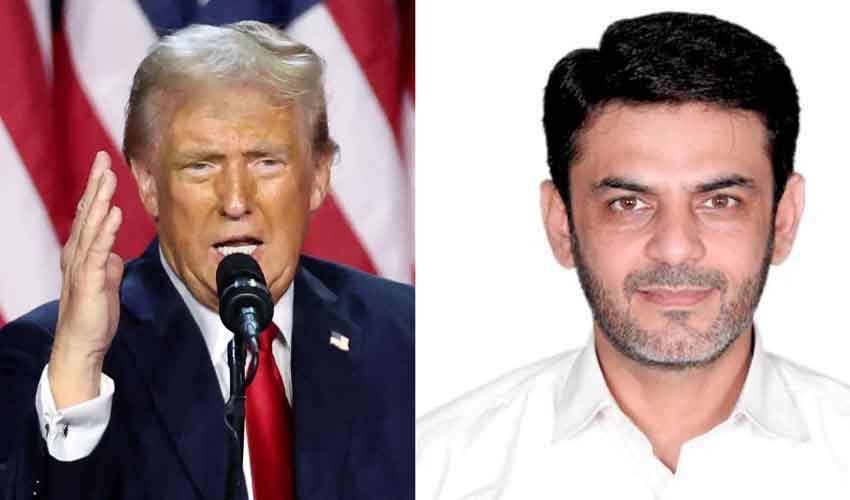
A third round of negotiations was held in Geneva on February 26 under the administration of Donald Trump. The talks were widely seen as the final opportunity for a diplomatic breakthrough.
However, no agreement was reached, as Tehran refused to halt uranium enrichment, dismantle its nuclear facilities, or accept indefinite restrictions on its nuclear program.
Shortly afterward, Israel launched airstrikes, with Defense Minister Israel Katz describing the operations as preemptive.
Top Iranian leaders killed in strikes
In a major development, coordinated US and Israeli airstrikes reportedly killed Iran’s Supreme Leader Ali Khamenei and several members of his family.
Several of Iran’s senior military and security officials were also killed, including:
-
Chief of Staff Major General Abdolrahim Mousavi
-
IRGC Commander-in-Chief Mohammad Pakpour
-
Supreme Leader adviser and Defense Council Secretary Ali Shamkhani
-
Defense Minister Aziz Nasirzadeh
These killings marked one of the most significant blows to Iran’s leadership in decades.