





Deputy Prime Minister and Foreign Minister Ishaq Dar has said Pakistan stands with Iran “wholeheartedly” but is not in favour of any conflict, as tensions escalate across Iran and the Gulf region.
Speaking in a media briefing and later in the Senate, Dar outlined the deteriorating regional situation, the impact on overseas Pakistanis, and Islamabad’s diplomatic efforts.
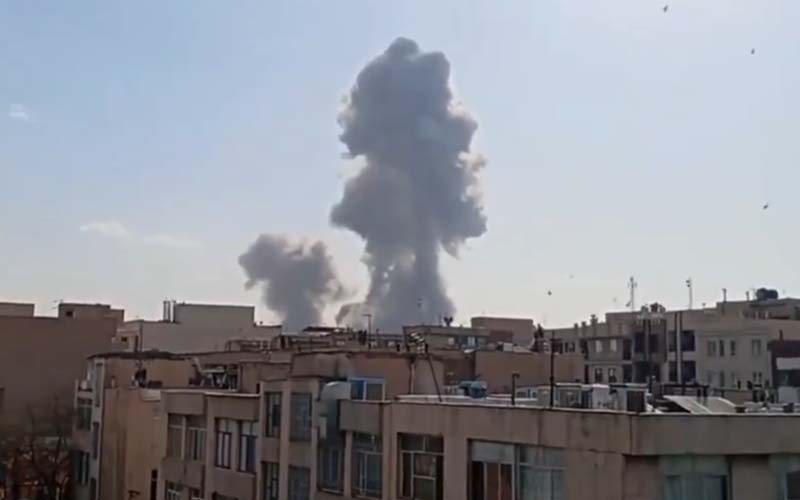
Dar said the situation in Iran and several Gulf countries is deteriorating. Air routes to Iran and most Gulf states have been closed, leaving people from various countries, including Pakistan, stranded.
However, he clarified that air routes to Saudi Arabia and Oman remain operational, and all airlines are continuing flights to Saudi Arabia.
He noted that the least attacks have taken place in Saudi Arabia and Oman.
Crisis management for Pakistanis
The Foreign Ministry’s crisis management cell is active 24 hours a day to monitor developments and assist citizens. Dar revealed that a Pakistani citizen was martyred in Abu Dhabi. He added that missiles in the UAE did not fall on American installations but instead struck airports and residential areas.
He provided updated figures on overseas Pakistanis:
-
350,000 Pakistanis are in Qatar, where the Qatari government and Pakistan’s mission are facilitating them.
-
40,000 Pakistanis are in Iraq, with 500 currently seeking to return from the Kurdistan Region.
-
A considerable number of Pakistani pilgrims are present in Karbala and Najaf.
-
2.5 million Pakistanis reside in Saudi Arabia, where the situation remains stable.
-
102,000 Pakistanis are working in Kuwait, and there is no need for concern regarding their safety.
-
Airports and land routes in Oman are open, and Iran has not taken any action regarding Oman.
-
No Pakistani is trapped in Bahrain.
Dar also confirmed that Iraq’s air borders are closed.
Pakistan’s diplomatic stance
The deputy prime minister reiterated that Pakistan condemned the attacks in Muslim countries. He stated that despite positive progress in negotiations, Iran was attacked. Pakistan raised its voice in favour of Tehran at every international forum.
He emphasized that Pakistan has shuttle communication with Iran and that contacts are still ongoing.
Dar thanked the Iranian leadership for appreciating Pakistan’s condemnation of external attacks. He said Iran has acknowledged Islamabad’s efforts and understanding of its position.
Defense agreement with Saudi Arabia
Dar reminded lawmakers that Pakistan signed a bilateral defense agreement with Saudi Arabia last year. He said Iran should take this into consideration and noted that the least reaction in the conflict was seen against Saudi Arabia and Oman.
He described attempts to give the issue a “wrong color” domestically as unhelpful, urging unity at home.
Senate briefing, political outreach
Speaking in the Senate, Dar said protesters should understand that Pakistan stands with Iran wholeheartedly. He revealed that the prime minister issued a statement on behalf of Pakistan and its people condemning the attacks.
Dar said he personally decided within 15 minutes to issue a condemnation despite knowing there would be resistance. “It is on record, and Iran appreciated it,” he noted.
He stressed that misrepresenting the issue within the country would not help. Due to the sensitivity of the regional situation, Dar announced that opposition leaders and parliamentary leaders will receive an in-camera briefing tomorrow.
The briefing will cover developments in Iran, the broader Middle East, and the Afghan situation.
Pakistan not in favour of conflict
Dar concluded by reiterating that Pakistan is not in favor of any conflict. He said Islamabad has made every possible effort, including behind the scenes, to promote peace and will continue to do so.
“We have not left any forum where we have not raised this issue,” he said, calling for unity to move the matter forward constructively.