






Oil prices softened on Monday as investors weighed hopes for the reopening of the strategic Strait of Hormuz against ongoing concerns over potential attacks on energy infrastructure.
As the Middle East conflict entered its third week, most European stock markets climbed while Asian markets largely fell.
Brent North Sea crude inched up 0.1 percent after earlier gains of around three percent, while the US benchmark West Texas Intermediate dropped more than one percent. The movements came as a non-Iranian tanker successfully transited the Strait of Hormuz with its automatic transponder active, despite major disruptions to shipping in the vital waterway, according to Marine Traffic.
US President Donald Trump over the weekend urged global powers to help reopen the strait, which has been affected by Iranian attacks. UK Prime Minister Keir Starmer said London was coordinating with allies to develop a “viable” plan for reopening the strait, which Iran has declared closed to US and allied vessels. Germany added that the Middle East conflict triggered by US-Israeli strikes on Iran “has nothing to do with NATO.”
“The situation is far from resolved, but investors appear reassured by signs of action,” said AJ Bell investment director Russ Mould.
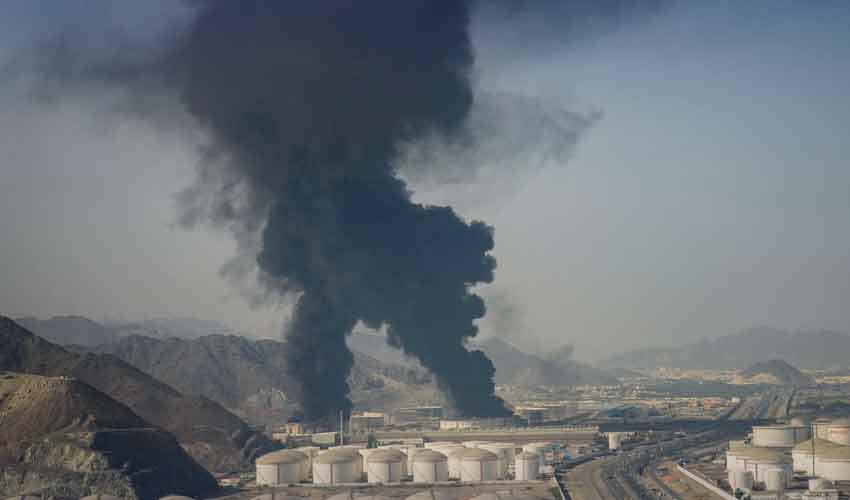
London, Paris, and Frankfurt stock markets rose on Monday, although analysts cautioned that market sentiment remains fragile. In Asia, Tokyo and Shanghai closed lower, while Hong Kong rose. During Asian trading hours, crude briefly surged above $100 per barrel following attacks on oil facilities on the UAE’s east coast and Iran’s Kharg Island.
Iran’s Foreign Minister Abbas Araghchi told CBS that Tehran is not interested in direct talks with Washington but is willing to discuss safe passage through the strait with other countries.
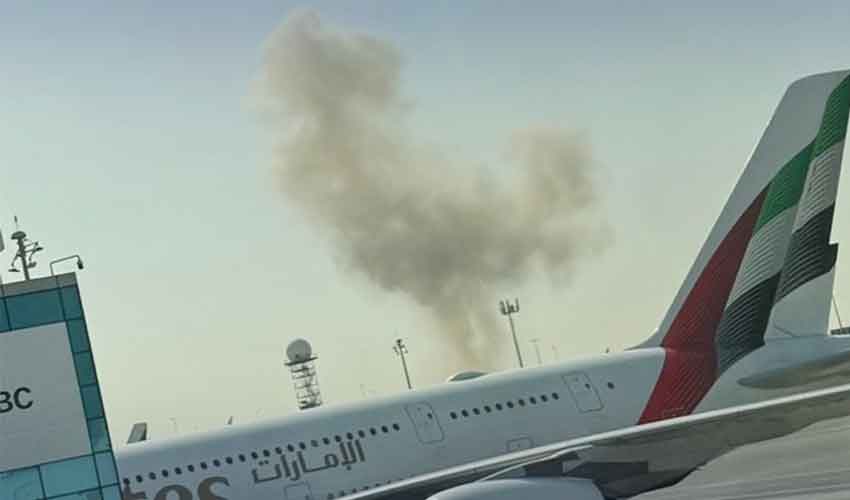
The conflict continued on Monday, with Saudi Arabia intercepting more than 60 drones since midnight, while flights at Dubai airport were temporarily halted after a drone-related fire incident.
Investors will now turn attention to upcoming policy meetings of major central banks, including the US Federal Reserve, Bank of England, European Central Bank, and Bank of Japan. While no immediate changes in interest rates are expected, analysts say any commentary on the war and rising energy costs will be closely monitored.
Japan announced it would begin releasing strategic oil reserves, following a recent International Energy Agency agreement to tap stockpiles to ease surging prices caused by the conflict.
“The impact of geopolitical events on markets depends more on when transit through the Strait of Hormuz normalizes than on when hostilities end,” noted Michael Brown at Pepperstone.