




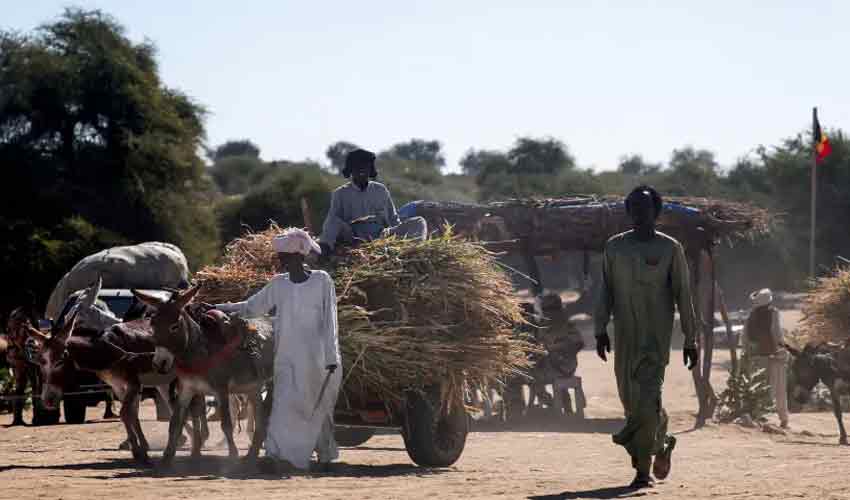
At least 169 people have been killed and buried in a mass grave in northern South Sudan, local officials said on Monday, underscoring a sharp escalation in violence in the fragile nation.
The killings occurred early Sunday in Abiemnom County, near the border with Sudan. Elizabeth Achol, health minister for the northern Ruweng Administrative Area, said 169 bodies had been interred in a mass grave. Local Information Minister James Monyluak confirmed the toll, stating that the victims included women, children and elderly people, and warned that the number could rise as additional bodies are recovered.
A diplomatic source, speaking on condition of anonymity, initially put the death toll at around 70 but acknowledged it was likely to increase. The government condemned what it described as a “barbaric attack” and confirmed that two senior local officials were among those killed.
Information Minister Ateny Wek Ateny said the casualties included both civilians and law enforcement personnel, adding that authorities would conduct a thorough investigation.
Preliminary reports suggest the attack may have been carried out by members of an ethnic Nuer group, possibly in retaliation for the killing of traders, according to the diplomatic source. No group has formally claimed responsibility.
Residents have fled to nearby villages, while others sought refuge at a United Nations compound in the area, Monyluak said. He added that security forces have since been deployed and the situation is now under government control.
A spokesperson for the UN Mission in South Sudan said peacekeepers were temporarily sheltering about 1,000 civilians at their base and providing emergency medical treatment to the wounded.
The violence comes amid rising tensions across the country. South Sudan, the world’s youngest nation since gaining independence in 2011, has struggled with civil war, entrenched poverty and widespread corruption.
The United Nations has warned of a possible return to full-scale civil war as a power-sharing agreement between President Salva Kiir and his long-time rival Riek Machar has steadily unraveled over the past year.
Clashes between government and opposition forces have intensified in Jonglei state over the past two months, displacing an estimated 280,000 people, according to the UN. The country also continues to grapple with recurring ethnic violence and deadly cattle-raiding.
Humanitarian workers have increasingly come under threat. On Monday, Médecins Sans Frontières (MSF) reported that 26 staff members were missing following an air strike on one of its facilities. The organization has suspended medical services in Lankien and Pieri in Jonglei state.
UN High Commissioner for Human Rights Volker Türk expressed deep concern over the deteriorating security situation, urging swift action to prevent the country from sliding back into widespread civil war.


.jpg)