





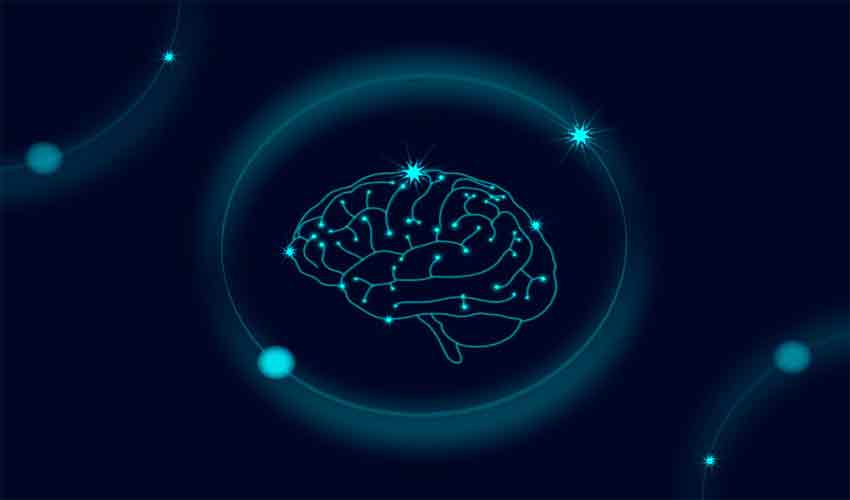
Rapid advances in artificial intelligence and neuroscience are bringing researchers nearer to translating human thoughts directly into words, raising new hope for people living with paralysis or severe speech impairments.
In recent experiments, patients fitted with implanted brain electrodes have been able to generate full sentences simply by imagining themselves speaking.
The technology relies on machine learning systems that interpret neural signals captured from tiny electrode arrays placed in areas of the brain associated with speech. These systems convert patterns of brain activity into written text with steadily improving speed and accuracy. In the latest trials, participants achieved communication rates approaching natural conversation, with systems capable of reflecting tone, rhythm and even elements of emotional expression.
Researchers have also begun identifying what is known as “inner speech” — detecting silent counting or imagined phrases without any physical attempt to vocalize. Early findings indicate that thinking and speaking draw on overlapping neural circuits, although decoding spontaneous, free-flowing thoughts remains a major challenge.
Beyond language translation, scientists are using generative AI models to reconstruct images, music and sensory experiences from brain scans. By analysing how the brain processes visual and auditory information, researchers are mapping how perception is encoded across different regions. This work could eventually provide insights into hallucinations, dreams and even aspects of animal cognition.
Private sector players are accelerating development. Companies such as Neuralink are working to commercialise brain-computer interface systems, though current devices monitor only a minute fraction of the brain’s billions of neurons.
Experts suggest that practical applications - including natural speech restoration and potentially even brain-to-brain communication - could emerge within the next two decades. However, such breakthroughs are also expected to intensify ethical debates surrounding privacy, consent and mental autonomy as technology moves closer to decoding the human mind.





.jpg)