





Saudi officials have warned that oil prices could surge to as high as $180 per barrel by the end of April if the Iran war continues disrupting global energy supplies.
The alarming projections come as markets react to escalating attacks on critical oil infrastructure across the Gulf.
Saudi Arabia’s oil officials are urgently assessing how high prices could climb if the conflict persists. Their base-case scenario suggests crude prices could exceed $180 per barrel by late April if supply disruptions continue.
Despite being a major oil exporter, Saudi Arabia is concerned about excessively high prices.
Analysts warn that such levels could force consumers to reduce oil usage permanently or trigger a global recession, ultimately hurting demand.
“Saudi Arabia generally does not like too-rapid increases in oil,” said Umer Karim of the King Faisal Center, noting that stable prices and market share are preferred.
Energy infrastructure attacks
Recent strikes on energy facilities have pushed prices higher.
After an Israeli attack on Iran’s South Pars gas field, Tehran retaliated by hitting Qatar’s Ras Laffan energy hub and other Gulf infrastructure, including Saudi facilities at Yanbu.
Also Read: Israel, Iran launch more attacks as crisis deepens
Iran has also continued targeting ships in the Gulf, effectively disrupting traffic through the Strait of Hormuz, a key route for 20% of global oil shipments.
Oil prices already rising
Benchmark Brent crude briefly surged to $119 per barrel before easing, while its all-time high remains $146.08 recorded in 2008. Analysts at Wood Mackenzie say even $200 per barrel is “not outside the realms of possibility” in 2026.
Meanwhile, Oman crude futures -- closely tied to Middle East supply -- have jumped past $166 per barrel.
The war has already removed millions of barrels of oil from global supply, pushing prices up around 50% since February 28. Saudi crude is currently being sold to Asian buyers at about $125 per barrel via the Red Sea.
Officials warn that as stored oil is depleted, shortages could intensify, pushing prices to $138–$140 next week.
Timeline of potential price surge
Saudi projections suggest oil could reach $150 by the second week of April if disruptions continue. Prices could then climb to $165 and eventually $180 in the following weeks if the Strait of Hormuz remains closed.
Oil traders are increasingly betting on higher prices, with options markets showing strong interest in $130, $140 and $150 scenarios. Some traders believe prices could rise even further in the coming months.
Also Read: Joint statement: Global powers vow to secure Hormuz Strait
Several variables could prevent prices from reaching extreme levels, including an end to the conflict or increased supply from sanctioned producers like Russia.
However, a drop in demand -- possibly due to recession -- could also bring prices down.
Experts warn that prices above $150 could trigger “demand destruction,” where consumers and industries cut back on usage. At such levels, people may reduce travel, shift to public transport or delay spending, while manufacturers could scale down operations.
Rising fuel costs hitting consumers
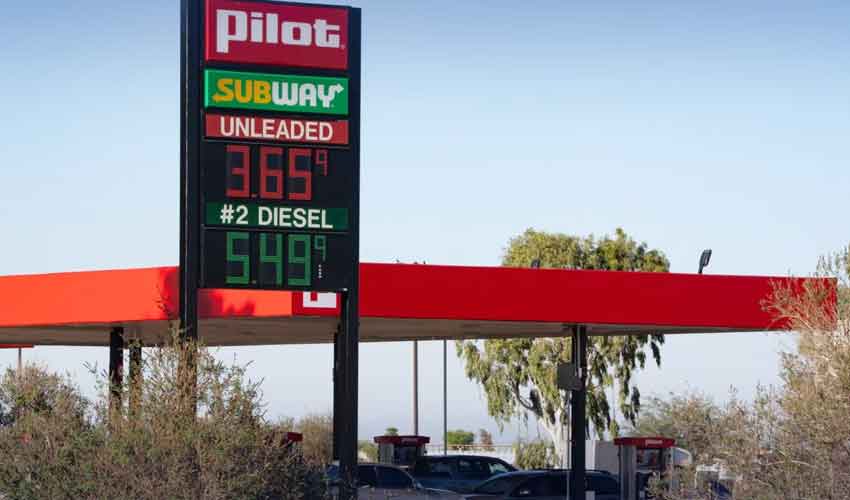
Fuel prices are already climbing sharply. In the United States, gasoline prices have risen to $3.88 per gallon from $2.93 a month ago, with some states experiencing even higher increases.
Diesel prices have surged to $5.10 per gallon, affecting industries reliant on transportation.
Higher energy costs are acting like a tax on consumers and businesses, reducing spending elsewhere. Energy-poor regions such as Europe and Asia are particularly vulnerable, with rising import costs driving inflation and weakening currencies.
Saudi Aramco assessing next steps
Saudi Aramco is closely monitoring the situation as it prepares to set official selling prices for April. The company is evaluating customer demand and market conditions, though it has declined to comment publicly.
With no clear end to the conflict, the oil market remains highly volatile. Whether prices surge toward $180 or stabilise will largely depend on geopolitical developments, supply recovery and global economic resilience.