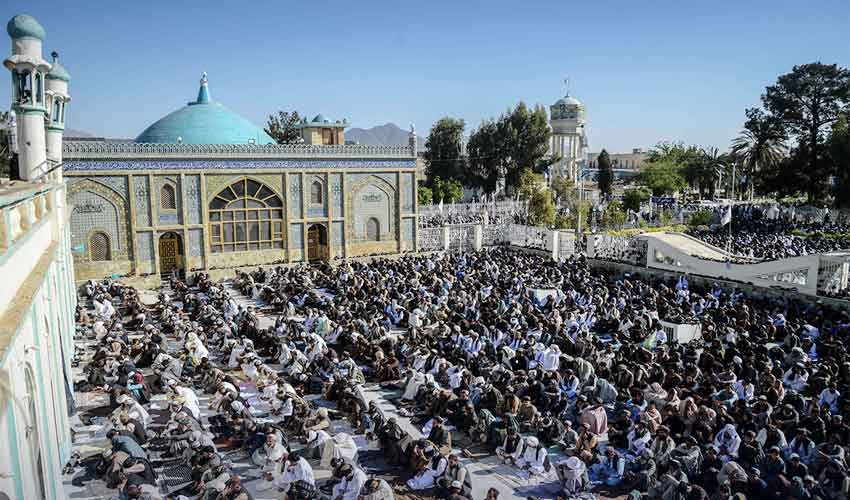







Hundreds of Muslim worshippers held Eid al-Fitr prayers at the gates of Jerusalem’s Old City on Friday after Israeli authorities closed access to the Al-Aqsa Mosque and other holy sites amid ongoing hostilities with Iran.
“It’s a catastrophic situation for Jerusalem’s residents, for Palestinians, and for Muslims worldwide,” said Wajdi Mohammed Shweiki, a Palestinian in his 60s, describing the unprecedented closure during the final days of Ramazan and Eid. Researchers note that this is the first time Al-Aqsa, Islam’s third holiest site, has been closed for Eid prayers since Israel annexed East Jerusalem in 1967.
Since the conflict between Israel, the United States, and Iran began on February 28, authorities have restricted access to major religious sites, including Al-Aqsa Mosque for Muslims, the Church of the Holy Sepulchre for Christians, and the Western Wall for Jews. Nationwide bans on gatherings of more than 50 people have also been enforced due to missile threats, with Israeli police reporting that shrapnel had fallen on the Old City earlier this week.
Worshippers who were denied entry arrived at dawn with prayer mats and attempted to enter the Old City. Police initially repelled them using physical force and tear gas, but the crowd eventually prayed on the street near Herod’s Gate.
An imam delivered a brief sermon, urging the worshippers to “pray, invoke Almighty God, and hope that your prayers will be answered,” concluding with a call for victory for the oppressed.
Police later dispersed the crowd without further violence, allowing people to move through the streets and buy food from local vendors. Authorities stated that prayers were permitted outside the Old City but emphasized that officers acted to enforce safety guidelines when crowds grew larger or attempted to breach security perimeters.
Palestinian clerics and worshippers expressed deep disappointment, viewing the closure as both a security measure and a potential attempt to restrict traditional access to the holy site. “Ramazan without the Al-Aqsa Mosque is a very sad feeling, a feeling of having a broken heart,” said Zeyad Mona, a local worshipper.
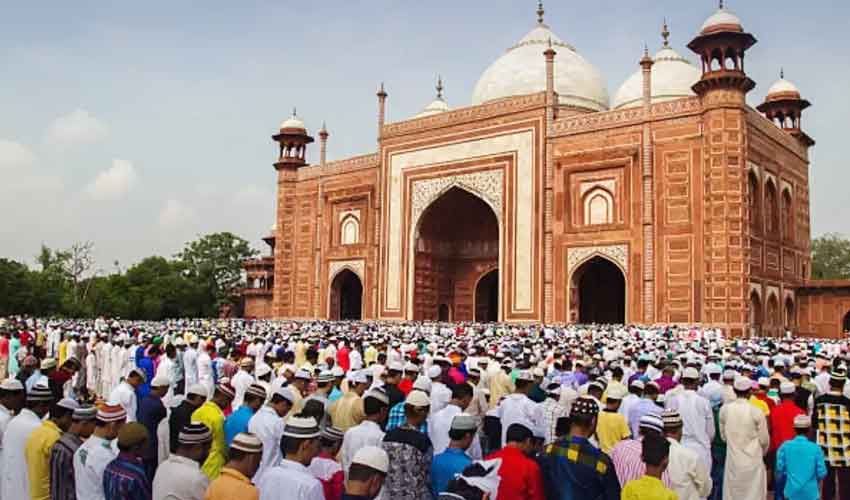
The modest gathering of a few hundred worshippers was a stark contrast to the usual Eid crowds, which can reach over 100,000 at Al-Aqsa Mosque. The closure has left many Muslims mourning the inability to perform prayers at one of Islam’s most sacred sites.