






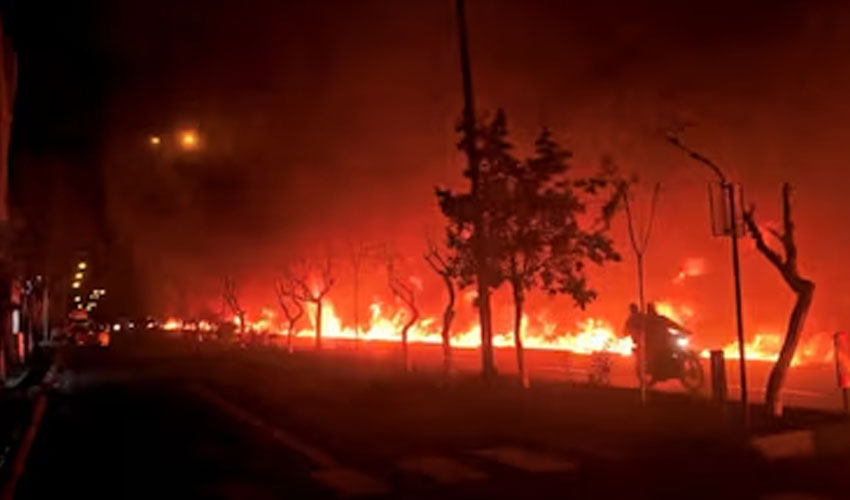
The World Health Organization has warned that “black rain” reported in Iran following strikes on oil facilities could pose serious health risks to residents.
The agency supported Iran’s advisory urging people to remain indoors as toxic smoke and pollutants spread through the air.
WHO spokesperson Christian Lindmeier said reports indicate oil-laden rain has fallen in parts of Iran this week.
The phenomenon followed strikes on oil infrastructure, including a refinery near Tehran, which sent thick black smoke into the sky on Monday.
“The black rain and the acidic rain coming with it is indeed a danger for the population, mainly for respiratory health,” Lindmeier said during a press briefing in Geneva.
WHO backs advice to stay indoors
Iranian authorities have advised residents to remain indoors due to worsening air quality.
Lindmeier said the WHO supports this precaution given the risks associated with fires at oil storage facilities and refineries.
“Given what is at risk right now … triggering fires and bringing serious air quality concerns, that is definitely a good idea,” he said.
Toxic chemicals released into air
According to the WHO, the strikes triggered a massive release of toxic hydrocarbons, sulfur oxides, and nitrogen compounds into the atmosphere.
Scientists warn that inhaling smoke or coming into contact with contaminated particles can cause:
-
Headaches
-
Eye and skin irritation
-
Breathing difficulties
Long-term exposure to some of these pollutants may also increase the risk of certain cancers.
A video shared with Reuters by a WHO employee showed black liquid being cleaned from the entrance of the organization’s office in Tehran on March 8.
However, Reuters said it could not independently verify the footage.
Researchers say the unusual rain likely occurred when precipitation combined with pollution particles already present in the air.
Akshay Deoras, a research scientist at the University of Reading, said the rainfall highlighted the severity of pollution in the region.
“The rain was an eye-opener to people,” he said.
Long-term risks still concern
Deoras noted that the greater danger could come from prolonged exposure to polluted air.
He advised that residents can reduce their risk by:
-
Staying indoors
-
Wearing masks outdoors
-
Covering exposed skin
Weather forecasts suggest dry conditions for the rest of the week, which may gradually improve air quality.
However, scientists warn that new strikes on oil facilities could worsen pollution levels again.
.jpg)







.jpg)