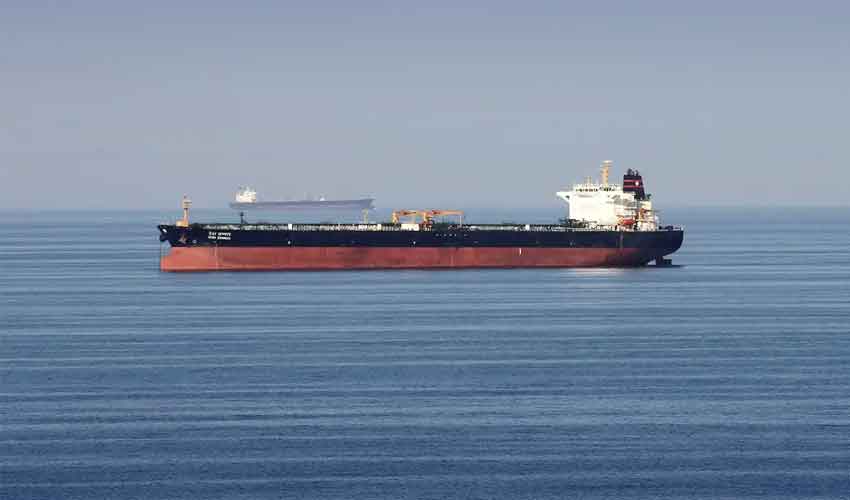






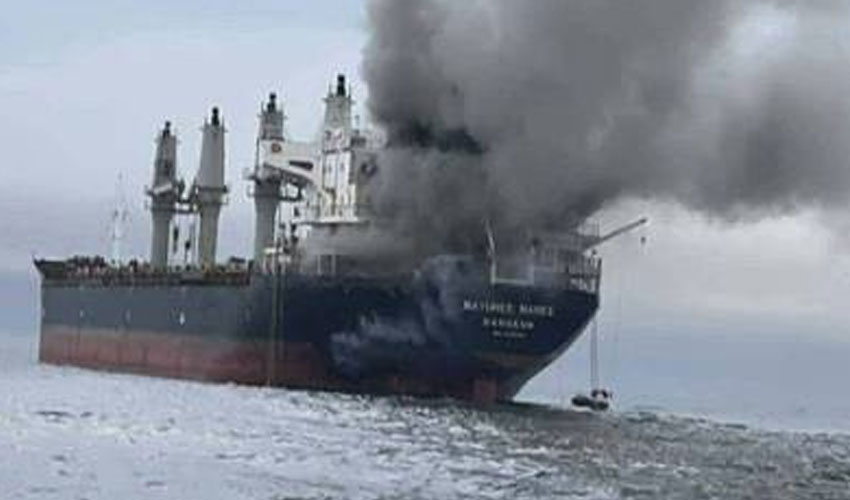
Six vessels, including two fuel tankers, were attacked in Gulf waters and the Strait of Hormuz on Wednesday, marking a sharp escalation in the ongoing conflict between Iran and U.S.-Israeli forces.
The assaults, involving explosive-laden boats and projectiles, have disrupted shipping in the region, threatening nearly a fifth of the world’s oil supply.
Two tankers, the Marshall Islands-flagged Safesea Vishnu and Malta-flagged Zefyros, were struck in Iraqi waters while loading fuel.
Iraqi officials reported that one crew member died in the attack, while 25 others were rescued. Fires on the vessels continued into Thursday.
Both tankers were carrying fuel products for Iraqi clients, including Basra Gas Company and the State Organization for Marketing of Oil (SOMO).
Other merchant ships struck
Earlier Wednesday, three additional ships were hit in the Gulf and Strait of Hormuz:
-
Mayuree Naree, a Thai-flagged dry bulk vessel, suffered engine room damage, with three crew members missing.
-
ONE Majesty, a Japanese container ship, sustained minor hull damage while at anchor near Ras Al Khaimah.
-
Star Gwyneth, a Marshall Islands bulk carrier, was struck while anchored near Dubai, causing damage to the hold but no injuries.
The Iranian Revolutionary Guards claimed responsibility for some attacks, signaling direct involvement in targeting commercial shipping.
Iraq halts oil port operations
Following the strikes, Iraq’s oil ports have completely stopped operations, while other commercial ports continue functioning.
Rescue operations are ongoing, with authorities recovering at least one crew member’s body and continuing searches for others.
Shipping through the Strait of Hormuz, a crucial chokepoint for global oil, has been effectively blocked.
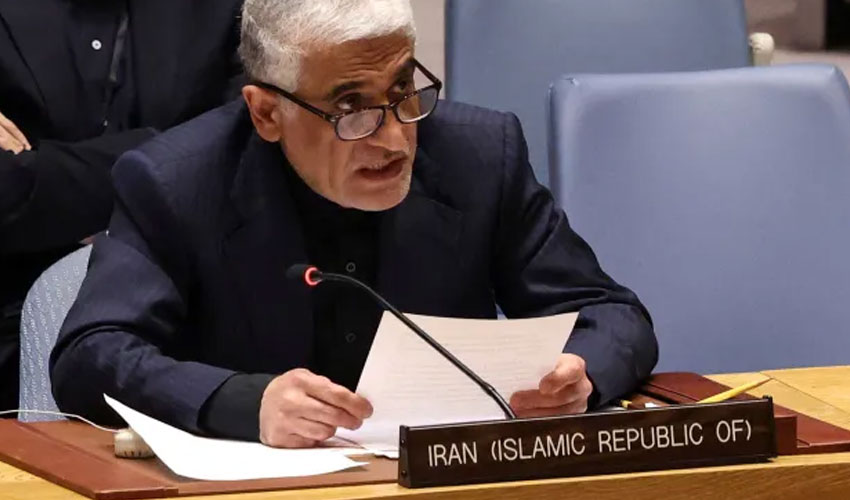
Iran warned the world to prepare for oil prices reaching $200 a barrel, while Trump claimed U.S. forces had neutralized most Iranian naval threats.
Oil prices surged nearly 5% after Wednesday’s attacks, adding to global economic uncertainty.
The International Energy Agency announced plans to release 400 million barrels from strategic reserves to stabilize markets.
U.S. Energy Secretary Chris Wright confirmed that 172 million barrels from the U.S. Strategic Petroleum Reserve would be released next week.
The G7 nations are reviewing potential naval escorts to ensure safer passage for commercial vessels in the Gulf.