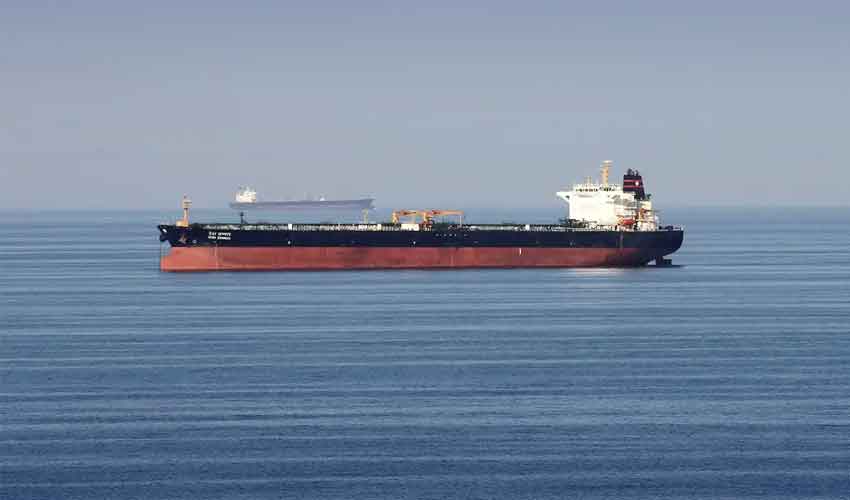







Oil prices surged past $100 a barrel on Thursday as Iran’s attacks on merchant ships in the Gulf and Iraqi waters intensified, disrupting key shipping routes and oil exports.
The spike threatens to stoke global inflation and increase borrowing costs worldwide.
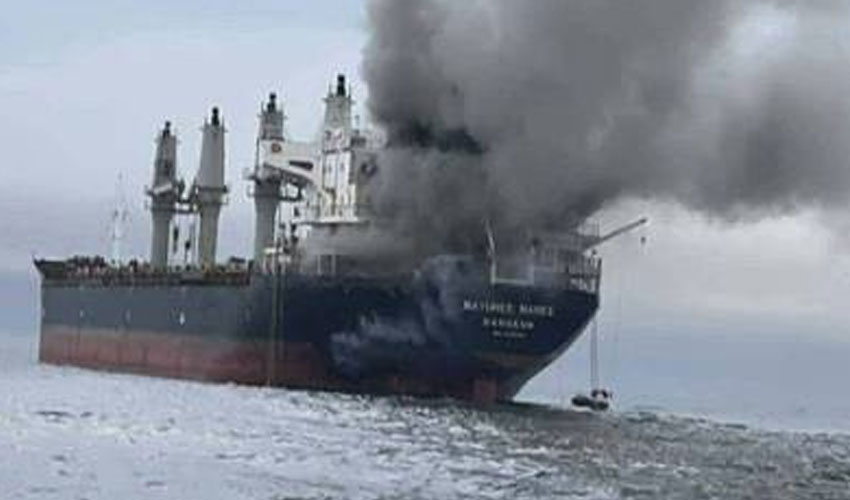
Explosive-laden Iranian boats struck two fuel tankers, the Marshall Islands-flagged Safesea Vishnu and Malta-flagged Zefyros, in Iraqi waters. Fires engulfed the vessels, while one crew member was killed and 25 others were rescued.
Iraq reported that its oil ports “have completely stopped operations,” while Oman evacuated vessels from its key oil export terminal at Mina Al Fahal as a precaution. Analysts warn that burning tankers in the Persian Gulf could further constrain global oil supply.
“These attacks appear to be a direct response to the International Energy Agency’s announcement of a historic strategic reserve release,” said Tony Sycamore, analyst at IG.
Oil benchmarks hit fresh highs
The attacks sent both major oil benchmarks sharply higher:
-
Brent crude climbed 9% to $100.22 a barrel.
-
U.S. crude rose 9% to $95.41 a barrel.
This marked a continuation of price surges following multiple attacks on Gulf shipping and closures of terminals, fueling fears of a prolonged energy supply crisis.
Markets react to energy crisis
Equity markets slid across the globe as the oil shock rippled through investor sentiment:
-
MSCI’s Asia-Pacific index fell 1.6%.
-
Japan’s Nikkei dropped 1.5%.
-
Hong Kong’s Hang Seng and Chinese blue-chips lost 1.2% and 0.6%, respectively.
-
U.S. S&P 500 and Nasdaq futures declined 1%, while European futures were also down around 1%.
Bond yields climbed as investors weighed higher inflation risks, with 10-year U.S. Treasury yields rising 4 basis points to 4.2472%. The surge in oil prices has led traders to pare back bets on Federal Reserve rate cuts, while currencies from energy-importing countries, including the euro and yen, weakened against the dollar.
In response to the oil supply disruption, the International Energy Agency (IEA) announced a release of 400 million barrels from global strategic reserves — the largest such move in history. The U.S. will release 172 million barrels starting next week to mitigate price shocks.
Despite these efforts, the ongoing attacks and the effective blockade of the Strait of Hormuz — a chokepoint for nearly 20% of the world’s oil — have kept energy markets on edge. Iran has warned the world to prepare for oil prices reaching $200 a barrel, underscoring the high stakes of the escalating Middle East conflict.