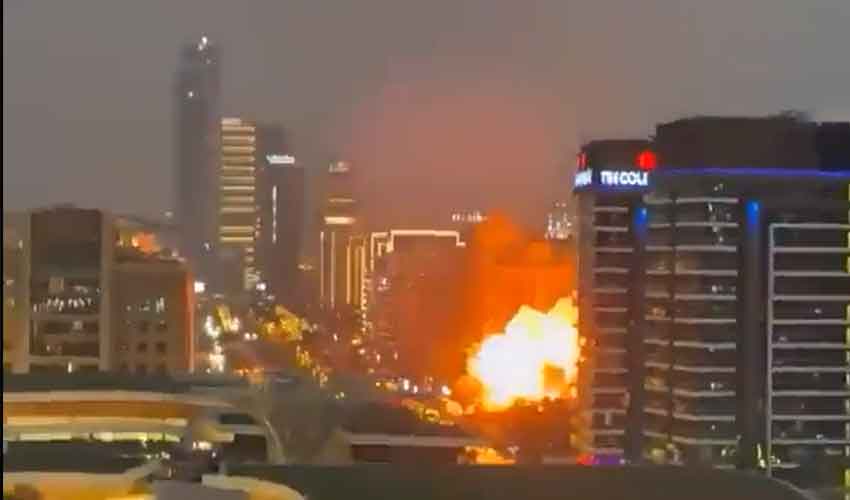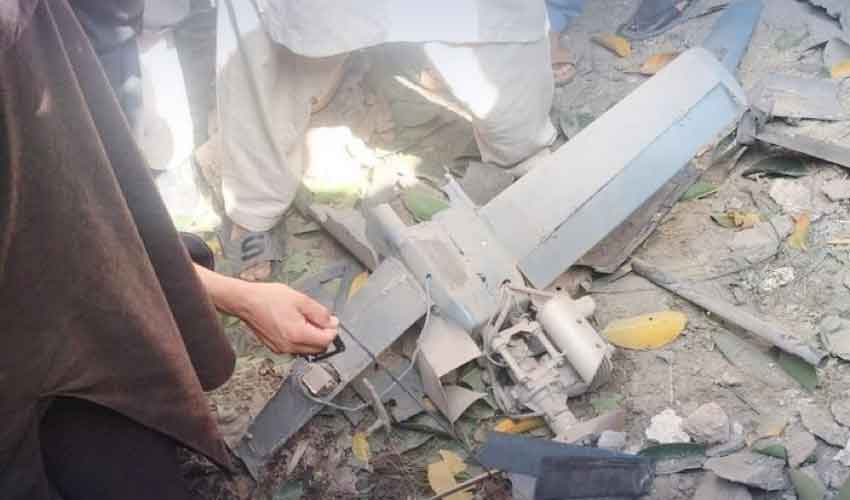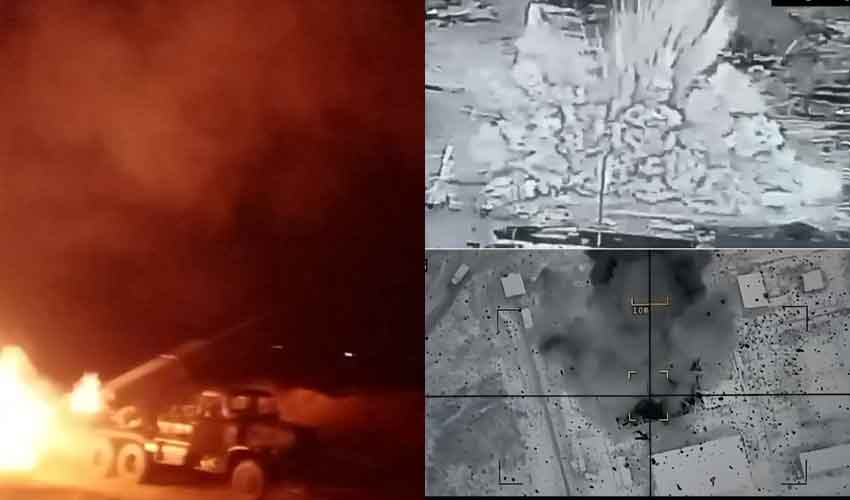






Air travel across the Middle East was thrown into chaos on Saturday after the United States and Israel launched strikes on Iran, prompting retaliatory missile attacks and widespread airspace closures.
Countries, including Qatar, Kuwait and the United Arab Emirates, temporarily shut down parts of their airspace, while major global airlines suspended or diverted flights, citing safety concerns.
Qatar temporarily suspended both sea and air traffic, according to news agencies. The country later confirmed that air traffic had been halted as a precaution.
Qatar, Kuwait and the United Arab Emirates closed their airspace following the escalation. The UAE said its airspace had been “partially and temporarily” closed as a precautionary measure, with Emirati authorities confirming the closure was temporary.
Missiles were reportedly destroyed in the skies of Abu Dhabi, foreign media said.
Kuwait’s aviation authority halted all flights to Iran until further notice, according to the state news agency.
Region’s skies largely emptied
Flight tracking maps showed the airspace over Iran virtually empty after Israel said it struck Iran and the US military launched a series of strikes against targets in the country. Iran retaliated with a salvo of missiles.
Israel, Iran, Iraq and Jordan closed their airspace following the attacks. A map from Flightradar24 showed aircraft avoiding large parts of the region.
Also Read: Israel-US joint strikes against Iran: 24 killed, senior leaders targeted
The escalation dashed hopes for a diplomatic breakthrough over Tehran’s nuclear dispute with the West and reignited tensions after weeks of US military buildup in the region.
Airlines suspend, divert flights
Multiple airlines announced they had halted flights to and from Israel, Iran and other affected countries after the wave of US-Israeli strikes and subsequent retaliation.
Among those suspending services were Air Arabia, Air France, KLM, Lufthansa and Wizz Air.
Germany’s Lufthansa said it was suspending flights to and from Dubai on Saturday and Sunday and temporarily halting routes to Tel Aviv, Beirut and Oman until March 7. Air France cancelled flights to and from Tel Aviv and Beirut.
KLM, the Dutch arm of Air France-KLM, brought forward the suspension of its Amsterdam–Tel Aviv service, cancelling Saturday’s flight. The airline had previously planned to halt flights from Sunday, March 1.
Also Read: Iran retaliates, launches ballistic missiles on Israel
Iberia cancelled flights to Tel Aviv, while Wizz Air suspended flights to and from Israel, Dubai, Abu Dhabi and Amman with immediate effect until next Saturday. Flights to and from Saudi Arabia were cancelled until Tuesday.
Emirates temporarily suspended operations. Lufthansa, Air India and Turkish Airlines also announced cancellations for the region.
Russian air carriers suspended flights to Iran and Israel, according to Russia’s Ministry of Transport.
Qatar Airways and regional rerouting
Several Qatar Airways flights that departed Saturday morning were seen circling over Kuwait or Saudi Arabia before returning to Qatari airspace and circling off Doha, according to Flightradar24.
Virgin Atlantic cancelled its VS400 service from London Heathrow to Dubai and warned that flights to the Maldives, India and Saudi Arabia could face longer travel times due to rerouting. The airline also said it would temporarily avoid Iraqi airspace.
Also Read: Netanyahu says Iran strike targets existential threat
British Airways cancelled flights to Tel Aviv and Bahrain until Wednesday, and grounded its service to Amman. A BA123 flight from Heathrow to Doha was ordered to turn around mid-journey and returned to London with more than 200 passengers on board.
Oman Air suspended all flights to Baghdad due to regional developments.
Aviation industry faces mounting strain
The Middle East has become a critical corridor for flights between Europe and Asia, especially with Russian and Ukrainian airspace closed to most airlines after years of war.
Conflict zones are placing increasing operational burdens on airlines, as aerial attacks heighten fears of accidental or deliberate shoot-downs of commercial aircraft. Longer rerouted flights also require additional fuel, driving up costs.
Airlines across the board said they were prioritizing passenger safety, apologizing for disruptions and urging customers to check flight statuses.
Despite the widespread shutdown of airspace, Israel’s Airports Authority confirmed that the country’s land border crossings with Jordan and Egypt remain open.