






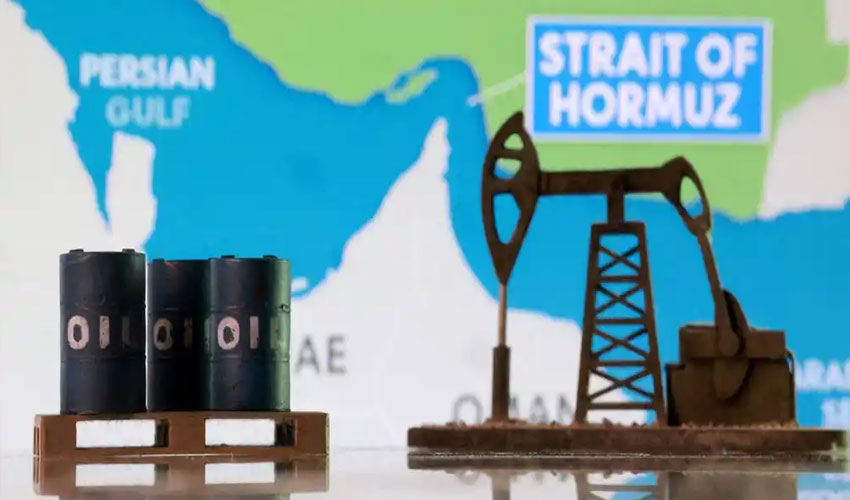
Global oil prices surged past $100 per barrel on Friday as escalating conflict in Iran threatens energy supplies through the Strait of Hormuz.
Investors are bracing for further disruptions, causing US stock markets to slip and the dollar to strengthen as a safe-haven currency.
Brent crude rose 2.67% to $103.14 per barrel, marking the first time it has settled above $100 since August 2022. West Texas Intermediate (WTI) futures increased 3.11%, closing at $98.71 per barrel.
The surge comes after US President Donald Trump warned that the US would be “hitting Iran very hard” in the coming week, following partial sanctions relief for Russian oil aimed at easing global supply pressures.
Strait of Hormuz disruptions
The conflict intensified as Iran’s new Supreme Leader Mojtaba Khamenei vowed to keep the strategic Strait of Hormuz closed, heightening fears of extended disruptions to oil exports. Around 20% of global crude supply passes through this vital shipping lane, making any blockage a serious concern for energy markets.
“Headlines are coming at the market like water from a fire hose, which is impacting the price of oil, and consequently, financial markets,” said Mitch Reznick, group head of fixed income at Federated Hermes.
US and global market reactions
The uncertainty pushed all three major US stock indexes lower for the day and the week. The Dow Jones fell 0.25%, the S&P 500 dropped 0.6%, and the Nasdaq Composite slid 0.9%. European stocks followed suit, with the STOXX 600 down 0.5%, while MSCI’s global stock gauge declined 0.9%.
Meanwhile, the US dollar strengthened against most currencies, up 0.8% on the day, as investors sought a safe haven amid geopolitical turmoil.
Rising oil prices have amplified inflation concerns, prompting traders to scale back expectations for Federal Reserve rate cuts. Previously priced-in easing of 50 basis points is now expected to be just 20 basis points, reflecting worries that persistent energy costs could sustain inflation.
Two-year Treasury yields hit a six-month high, while US economic growth for Q4 2025 was revised downward, showing weaker consumer spending and business investment.
The euro fell 0.8% to $1.1417, and the Japanese yen dropped to its lowest level since July 2024 at 159.66 per dollar. Analysts noted that central banks face higher barriers to intervene amid strong dollar demand. Gold also declined 1.27% to $5,014 per ounce, capping weekly losses as investors favored oil and the dollar.