




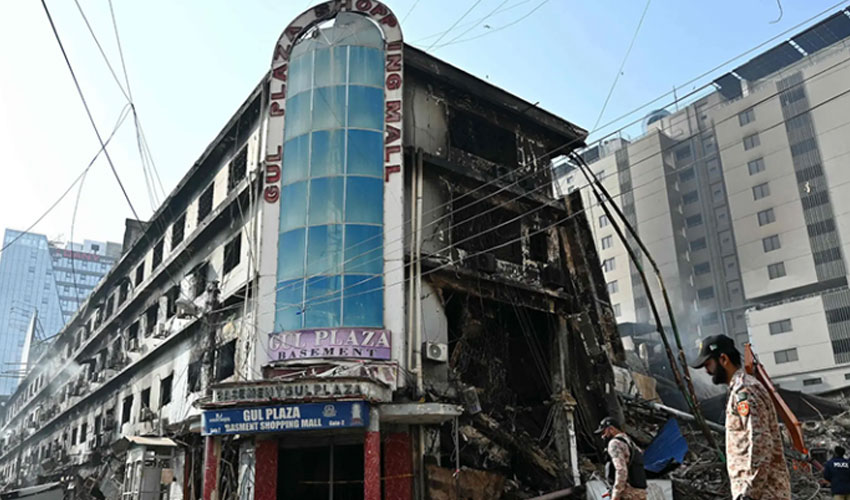
A judicial probe into the devastating Gul Plaza fire has found that most victims died due to suffocation, according to the police surgeon’s findings submitted before the commission.
According to Dr. Samia Syed, the main cause of death for 73 victims in the Gul Plaza tragedy was asphyxiation — a condition caused by obstruction in breathing.
She presented her professional opinion before the judicial commission investigating the incident, stating that suffocation remained the dominant factor behind the fatalities.
Dr. Syed noted that ‘polytrauma’ — involving multiple severe injuries — could not be ruled out in 66 victims, as their bodies were found in fragmented condition.
She further explained that while asphyxiation was confirmed as the primary cause in six complete bodies, the remaining 66 were fully burned remains. In those cases, fatal fire injuries were declared the primary cause of death.
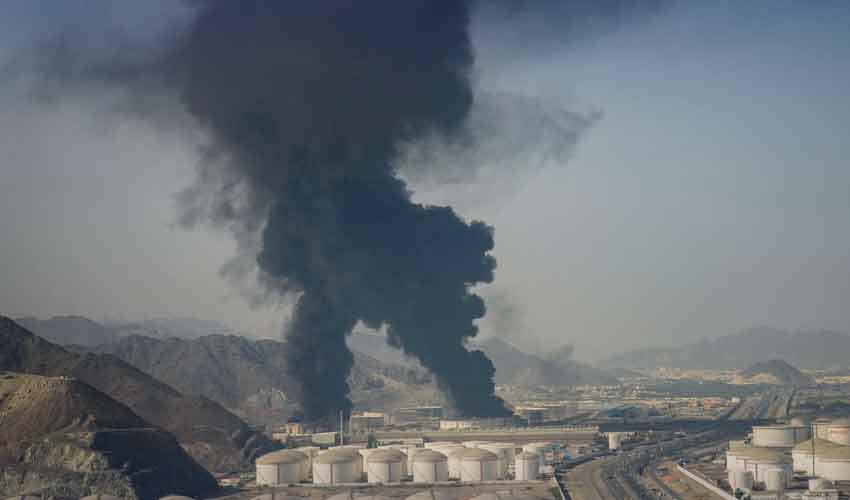
The blaze erupted at Gul Plaza in Karachi on the night of January 17 and took nearly two days to bring under control.
The fire destroyed more than 1,100 shops, leaving widespread devastation. Even after 10 days of continuous search operations, at least eight people remain missing.
Recovery details and medical findings
The police surgeon informed the commission that eight injured individuals were rescued, while seven bodies and the remains of 66 others were recovered from the site.
She added that while most remains have been fully processed, post-mortem examinations for six complete bodies have not yet been conducted.
Toxicology reports from the deceased are still awaited, which may provide further clarity on the presence of toxic gases or other substances.
Questions on rescue efforts
When asked whether the victims’ condition indicated delays in rescue operations, Dr. Syed refrained from drawing conclusions.
She clarified that rescue refers to safely saving the living, noting that eight injured individuals were brought out alive. However, she provided timelines of when remains were recovered to assist the investigation.
The tragedy has sparked conflicting claims among stakeholders appearing before the commission.
The Chief Fire Officer held the Gul Plaza administration responsible, citing failure to implement fire safety protocols. In contrast, Management Committee President Tanveer Pasta alleged that rescue services arrived late and failed to evacuate people in time.
The judicial commission has so far recorded statements from multiple stakeholders, including key and prosecution witnesses, officials from the Sindh Building Control Authority, and the fire department.
All medical reports have been compiled and submitted to relevant institutions as the inquiry continues.