





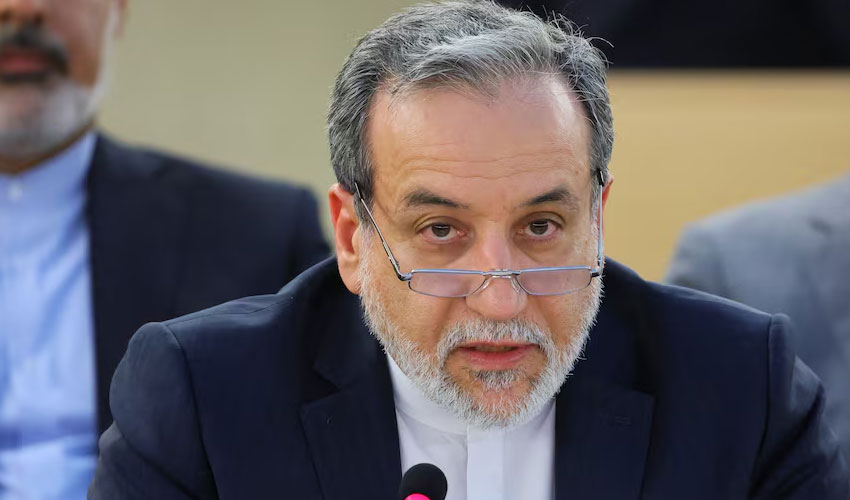
Iran’s Foreign Minister Abbas Araghchi has downplayed the impact of the Israeli assassination of Ali Larijani, insisting that Tehran’s political system remains strong and resilient.
He emphasized that the country’s leadership is supported by well-established institutions, not a single individual.
In an interview with Al Jazeera, Araghchi said the United States and Israel “have yet to realize” that Iran does not rely on individual figures.
“The Islamic Republic of Iran has a strong political structure with established political, economic, and social institutions. The presence or absence of a single individual does not affect this structure,” Araghchi said.
He added that while influential, no individual’s death—including that of the supreme leader Ayatollah Ali Khamenei, who was killed on 28 February—has toppled Iran’s system, which immediately provided replacements.
Araghchi stressed the same principle applies to other officials, including himself: “If the foreign minister were ever to be martyred, there would ultimately be someone else to take the position.”
Impact of targeted assassinations
The killing of Larijani, 67, a close confidant of the late Khamenei and his successor Mojtaba Khamenei, marks the removal of one of the most senior figures in Tehran’s leadership since the conflict began.
Brigadier General Gholamreza Soleimani, head of the Basij forces, was also killed in an “American-Zionist enemy” attack. Soleimani had been a key internal security commander and a central figure in Iran’s response to US-Israeli actions.
Analyst Marwan Bishara of Al Jazeera noted that while Israel’s targeted killings are not typical in warfare, the system’s strength means the death of one leader is unlikely to cause collapse. However, he warned that cumulative losses could produce broader strategic consequences.
“Quantitative changes lead to qualitative changes,” Bishara said, acknowledging the political and operational impacts of successive targeted strikes
Araghchi reiterated that Iran did not start the war and held the United States accountable for the conflict and its consequences.
“This war is not our war. We did not start it. The United States started it and is responsible for all the consequences—human and financial—whether for Iran, the region, or the entire world,” he said.