





US President Donald Trump has claimed that Iran allowed 10 oil tankers to pass through the Strait of Hormuz, describing the move as a “present” that signals progress in ongoing indirect negotiations between the two sides.
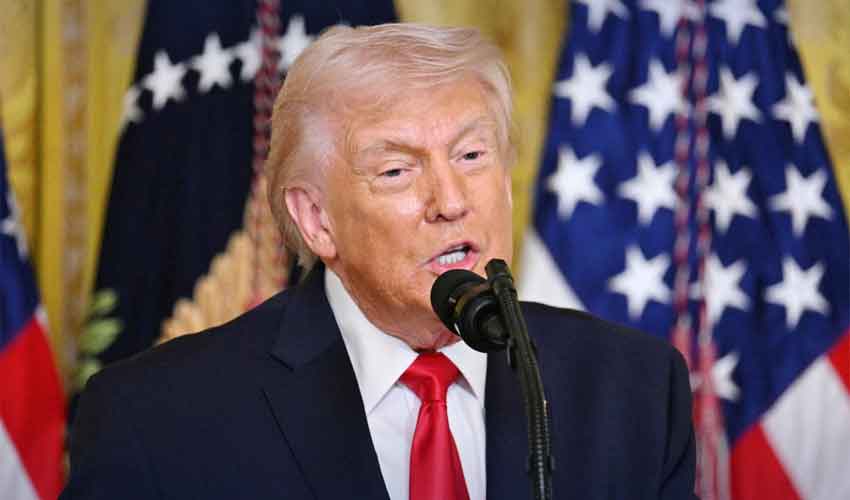
Speaking during a White House Cabinet meeting, Trump said Iran initially offered to allow eight oil tankers through the strategic waterway as a show of sincerity.
“They said, ‘To show you the fact that we’re real and solid, we’re going to let you have eight boats of oil,’” Trump stated. He added that the number eventually increased to 10 vessels after Iran reportedly sent two additional tankers as an apology over earlier remarks.
Trump claimed that some of the tankers were Pakistani-flagged, although there has been no independent confirmation of this detail.
Part of broader US-Iran negotiations
The US president described the development as proof that “very substantial talks” are underway with Iran, though he declined to identify the intermediaries involved.
He had earlier puzzled observers by referring to a valuable “energy-related present” from Iran without providing specifics. The tanker passage now appears to clarify those remarks.
Also Read: Iran sends formal reply to US proposals, awaits response
Despite Trump’s assertions, Tehran has denied holding direct talks with Washington.
Pakistan acting as mediator
Pakistan has emerged as a key intermediary in the ongoing diplomatic efforts. Deputy Prime Minister and Foreign Minister Ishaq Dar confirmed that messages between the United States and Iran are being relayed through Pakistan.
US Special Envoy Steve Witkoff also noted that a 15-point framework for a potential peace deal has been shared via mediators, including Pakistan, as part of efforts to end the conflict.
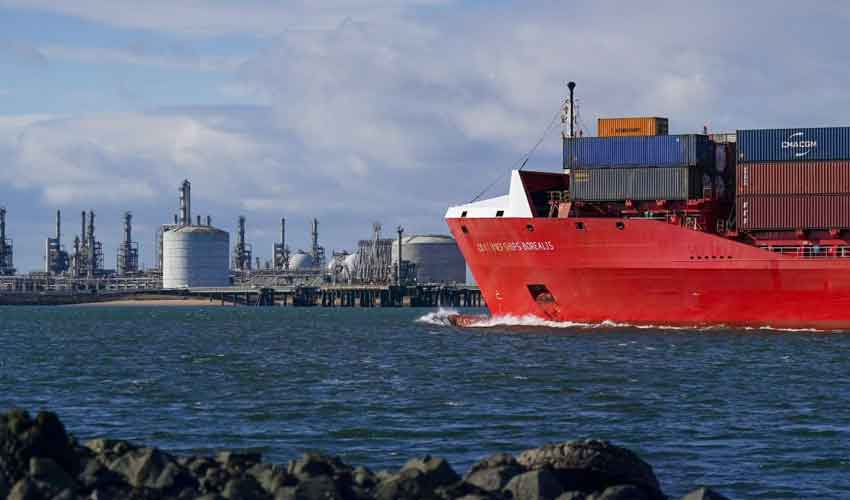
The Strait of Hormuz is one of the world’s most vital shipping routes, with roughly 20 million barrels of oil — about a quarter of global seaborne crude — passing through it daily. The waterway has been effectively disrupted for weeks due to ongoing conflict, raising concerns over global energy supplies, particularly in the Asia-Pacific region.
Also Read: Iran allows Bangladeshi oil tankers to transit Strait of Hormuz
While Trump expressed optimism that the situation could “clean up pretty quickly,” he acknowledged the risks remain high.
“Even 1% is unacceptable,” he said, referring to the threat of missile attacks on oil tankers.
Conflicting claims
Although several tankers have successfully crossed the strait in recent days, there is no public confirmation of exactly 10 vessels or of Pakistani-flagged ships being involved.
Meanwhile, Iranian state media reported that Tehran rejected a US ceasefire proposal and instead submitted its own conditions, including sovereignty over the Strait of Hormuz.
Trump also suggested that taking control of Iran’s oil resources remains “an option,” though he declined to elaborate further.
Separately, it was reported that Iran dispatched a formal reply to the United States’ 15-point proposals and now awaits Washington’s response.
According to an Iranian news agency, the reply was conveyed last night through intermediaries. Meanwhile, a senior Iranian official told a British news agency that the proposals, received via Pakistan, had been reviewed. Iran considers the US proposals to be one-sided and unjust.
The official said the proposals serve only American and Israeli interests, adding that Pakistan had been informed that the proposals lack essential requirements.
He stated that no arrangements for talks have yet been made, and at this stage no plan for negotiations is in sight. Pakistan and Türkiye are making efforts to establish common ground between the United States and Iran.