





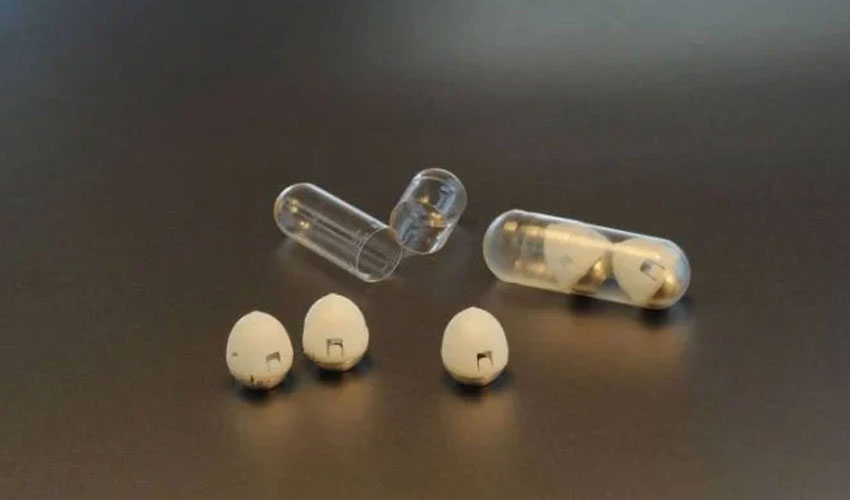
In a promising breakthrough from Japan, scientists say insulin pills may soon replace injections for people living with diabetes.
The new oral system could make treatment simpler and less painful, offering hope after decades of research.
For over 100 years, researchers have tried to turn insulin into a pill. However, the human digestive system has remained a major obstacle.
Enzymes in the stomach typically break down insulin before it can reach the bloodstream. At the same time, the intestines lack a natural mechanism to absorb insulin effectively.
Breakthrough from Kumamoto University
Researchers at Kumamoto University believe they may have found a solution to this long-standing problem.
Their approach uses a special cyclic peptide known as ‘DNP peptide,’ designed to pass through the small intestine and enter the bloodstream without being destroyed.
Two methods, promising results
Scientists tested two different techniques during the study.
In one method, insulin was combined with the peptide. In the other, both were chemically linked together.
Both approaches showed encouraging results, successfully lowering blood sugar levels in diabetic mice.
Significant improvement in absorption
One of the most notable achievements was improved bioavailability.
The new system reached around 33 to 41 percent absorption, a major improvement compared to earlier oral insulin attempts that required much higher doses.
This marks an important step toward making insulin pills practical for everyday use.
The findings, published in the journal Molecular Pharmaceutics, are still in the early stages.
Researchers are now testing the method in larger models before moving to human trials.