




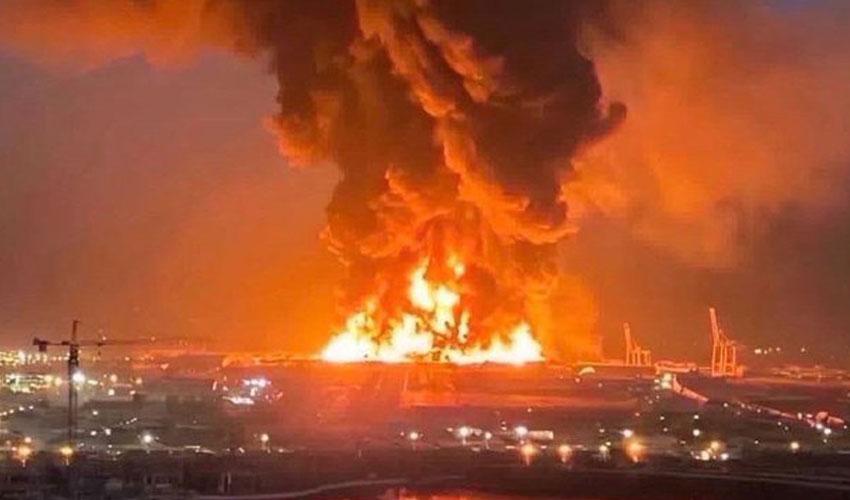
Israeli airstrikes pounded Beirut’s southern suburbs early Monday after Hezbollah launched missiles and drones toward Israel, claiming the attack was in retaliation for the martyrdom of Iran’s Supreme Leader.
The escalation has forced hundreds of thousands of Lebanese civilians to flee their homes, turning parts of the capital into scenes of chaos during the holy month of Ramadan.
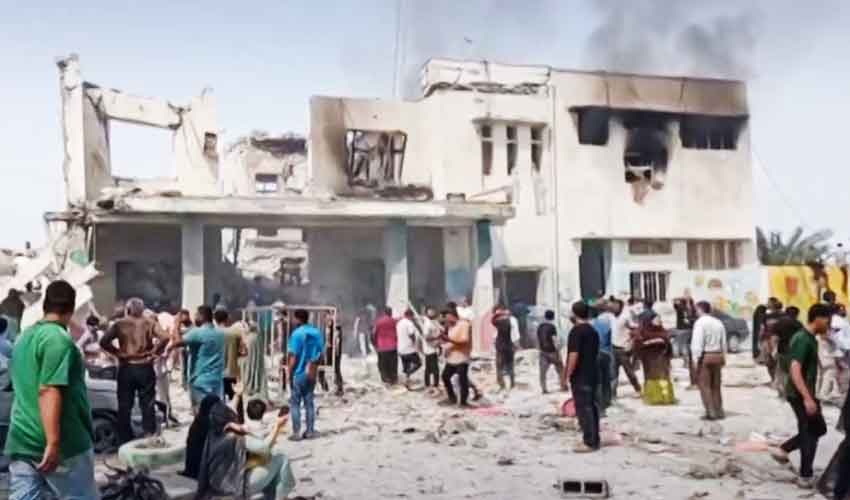
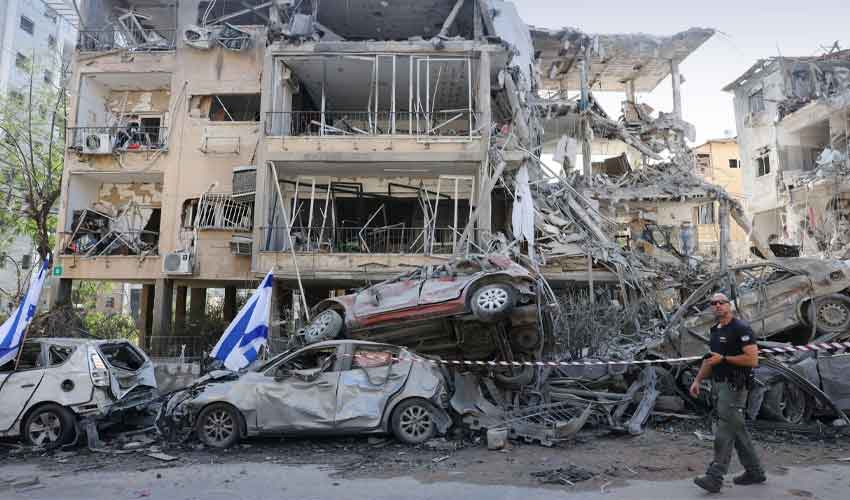
The Israeli military carried out intensive strikes on Beirut’s southern suburbs, known as Dahiyeh — a stronghold of Hezbollah.
More than a dozen explosions were reported around 2:40 a.m. (0040 GMT), marking the heaviest bombardment in the area since the 2024 war between Israel and Hezbollah.
Residents fled on foot and by car, clogging roads as displacement orders spread beyond southern Lebanon to parts of Beirut itself.
Forced evacuations and widening conflict
The Israeli army issued warnings ordering residents of dozens of villages in southern and eastern Lebanon to evacuate.
According to the Israeli military, it had begun striking Hezbollah targets across Lebanon, including senior members in the Beirut area.
Israeli Chief of the General Staff Eyal Zamir said Hezbollah had “opened a campaign against Israel overnight” and was fully responsible for the escalation.
The violence further widens a regional conflict that intensified after the United States and Israel launched strikes on Iran over the weekend.
Hezbollah claims retaliation
Hezbollah said it targeted an Israeli missile defence facility south of Haifa in revenge for “the pure blood” of Ali Khamenei.
The group described its action as a response to repeated Israeli attacks and assassinations of its leaders and fighters.
It was the first such attack by Hezbollah since the 2024 war, during which the group was significantly weakened.
Israel holds Hezbollah responsible
The Israeli military stated that several projectiles launched from Lebanon fell in open areas, with one intercepted by the Israeli air force.
“No injuries or damages were reported,” it said.
Israel also conducted airstrikes in southern Lebanon and the Bekaa Valley, according to Lebanese security sources.
The latest strike on Dahiyeh was Israel’s first in the southern suburbs since it killed senior Hezbollah military official Ali Tabtabai in November.
Ceasefire under strain
Israel and Lebanon had agreed to a U.S.-brokered ceasefire in 2024 after more than a year of fighting that culminated in major Israeli strikes weakening Hezbollah and killing its leader, Hassan Nasrallah.
However, Israel has continued to carry out what it describes as targeted strikes against Hezbollah positions, accusing the group of attempting to rearm.
Lebanon’s presidency said it had been assured by the U.S. ambassador that Israel would not escalate as long as no hostile acts originated from Lebanon.
Lebanese Government Reaction
Lebanese Prime Minister Nawaf Salam criticized the firing of missiles from southern Lebanon, calling it irresponsible and a suspicious act that jeopardizes the country’s security.
The Lebanese health ministry could not immediately provide casualty figures following the strikes.
Ramadan Disrupted by Displacement
The escalation comes during Ramadan, when Muslims fast from dawn to sunset.
Instead of preparing for their pre-dawn meal, many residents of Dahiyeh were seen packing belongings and searching for shelter as displacement orders took effect.
The southern suburbs of Beirut, home to hundreds of thousands, have faced repeated attacks since the 2024 conflict, despite the ceasefire agreement.