





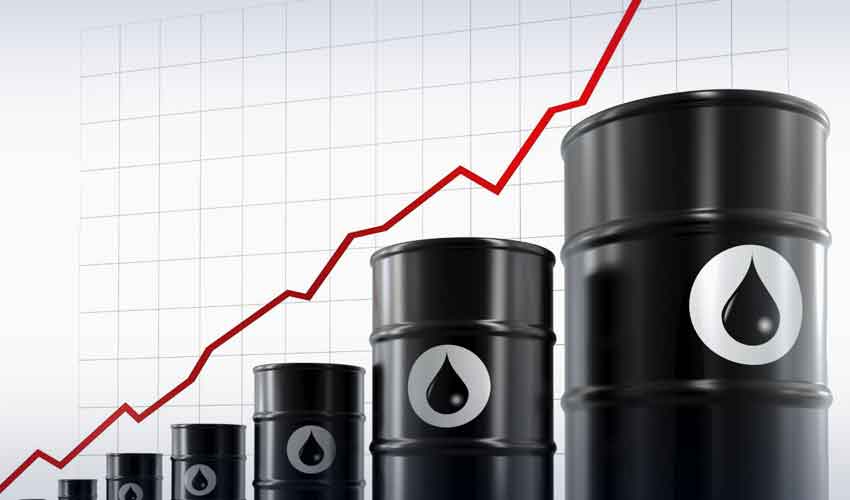
Global oil prices have surged dramatically in international markets, reaching their highest levels in more than two years as geopolitical tensions escalate in the Middle East.
Analysts warn the situation could disrupt global energy supplies and push oil prices even higher in the coming weeks.
Crude oil prices rose rapidly in the global market, with US crude recording a sudden double-digit increase.
West Texas Intermediate (WTI) crude jumped by more than 12%, reaching around $90.90 per barrel. According to news agencies, the price briefly surged by $10, pushing WTI crude to $91.27 per barrel.
At the same time, Brent crude oil prices climbed sharply. Brent rose by about 8.5%, reaching roughly $92.6 per barrel, while reports said the price increased by $7.40, touching $92.87 per barrel.
News agencies say this marks the largest rise in crude oil prices since 2020, highlighting growing market fears over supply disruptions.
Qatar warns of supply halt
Oil prices climbed further after Qatar’s energy minister Saad al-Kaabi warned that energy exporters in the Gulf could soon halt production if the ongoing conflict in the Middle East continues.
Speaking to the Financial Times, Kaabi said the situation could severely disrupt global energy supplies and even “bring down the economies of the world.”
He warned that oil prices could climb as high as $150 per barrel if the conflict involving Iran continues for several weeks.
Also Read: Petrol, diesel prices increased by Rs55 each in Pakistan
“If this war continues for a few weeks, GDP growth around the world will be impacted,” Kaabi said.
“Everybody's energy price is going to go higher. There will be shortages of some products and there will be a chain reaction of factories that can't supply.”
Middle East conflict driving market fears
The Middle East plays a critical role in global energy supplies and shipping routes, and the ongoing conflict has raised serious concerns among energy markets.
Brent crude rose more than 9% on Friday, exceeding $93 per barrel, the highest level since autumn 2023.
Rising oil prices can affect more than just fuel costs. They can also push up the prices of heating, food, and imported goods, increasing financial pressure on households and businesses.
Economists warn that if oil and gas prices remain elevated, they could fuel inflation in major economies such as the United States and the United Kingdom, where inflation had recently been easing.
Consumers are already beginning to feel the impact of higher energy prices.
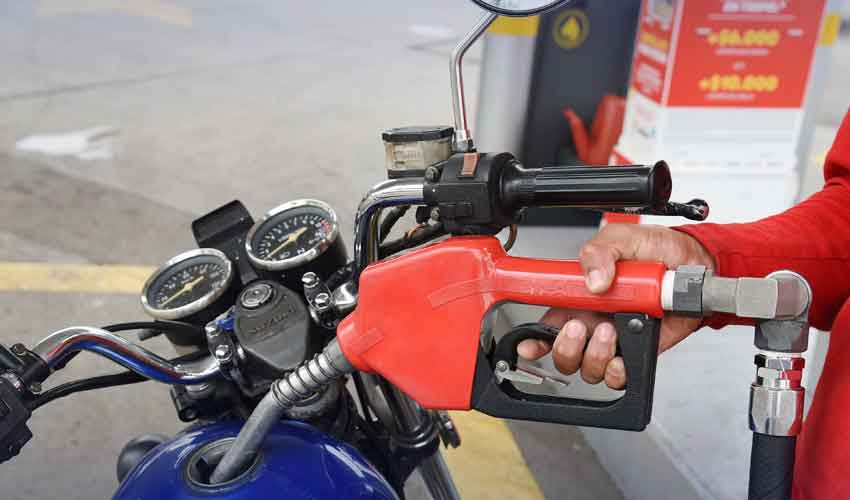
In the UK, the RAC motoring group reported that petrol prices have risen by 3.7 pence per litre, while diesel prices increased by 6 pence, reaching a 16-month high since last Saturday.
The Competition and Markets Authority (CMA) said it is closely monitoring petrol station prices to track how the situation develops.
Household energy bills may also increase, although the impact might not be felt immediately because the UK energy regulator Ofgem has already set the price cap until July.
Could this trigger global energy crisis?
There are growing concerns that the crisis could resemble the energy shock that followed Russia’s invasion of Ukraine in 2022. However, current oil and gas prices remain below the peaks recorded during that period.
Energy analyst Jorge Leon from Rystad Energy says that the situation poses a “real risk to the global economy.”
Also Read: US temporarily eases Russia oil sanctions to be sold in India
“I think we're on the edge of trying to understand if this is a very short energy crisis with limited implications, or if we're at the beginning of a massive economic and energy crisis,” Leon said.
He added that if the conflict lasts longer than two weeks, the chances of severe consequences for global energy markets and the world economy will rise significantly.
LNG production halted in Qatar
Qatar, one of the world’s largest exporters of oil and liefied natural gas (LNG), has already taken emergency steps. State-owned QatarEnergy confirmed it had halted LNG production following military attacks on its facilities.
The company declared “force majeure,” a clause that allows suppliers to suspend contractual obligations due to extraordinary circumstances.
Kaabi said that if the conflict continues, other energy exporters may also be forced to stop production within days. Even if the conflict ends immediately, he warned that it could take weeks or even months for normal production levels to resume.
Strait of Hormuz disruption
A key factor driving the surge in oil prices is disruption in the Strait of Hormuz, one of the world’s most important shipping routes for energy. Normally, about one-fifth of the world’s oil supply passes through the strait every day.
However, shipping traffic through the narrow waterway has nearly stopped since the US-Israel conflict with Iran began last weekend.
A prolonged blockage could make goods and services more expensive worldwide, affecting major economies including China, India, and Japan, which rely heavily on oil shipments passing through the strait.
Also Read: IMF wants Pakistan to raise petrol, diesel prices
Some Gulf countries have alternative routes to transport oil. Both Saudi Arabia and the United Arab Emirates operate pipelines that allow them to export oil without relying on the Strait of Hormuz.
However, analysts warn that continued threats to shipping in the region could drive both oil prices and shipping costs even higher.
Storage limits could force production cuts
Analysts say Gulf countries may temporarily store oil if exports are disrupted. But storage capacity is limited, meaning that once storage facilities are full, producers may have no choice but to stop production entirely.
According to Rystad Energy, countries may have only days or a few weeks before reaching that point, depending on available storage capacity.
Leon said oil prices exceeding $100 per barrel is a realistic scenario, but the key question is how long prices remain at that level.
If prices surge significantly, governments could release strategic oil reserves, as they did following Russia’s invasion of Ukraine. This step is often used to stabilize markets and increase supply during global energy disruptions.
Despite the alarming warnings, some analysts say a complete shutdown of Gulf energy production remains unlikely. Lindsay James, investment strategist at Quilter, described a prolonged halt to all oil and gas production in the Gulf as an “extreme scenario.”
She said market movements suggest investors still expect disruptions in the Strait of Hormuz to be resolved relatively quickly.
However, she cautioned that the longer the conflict continues, the greater the risk of prolonged economic consequences.
Higher energy costs may slow global growth
For households, the biggest impact will likely come through higher energy prices rather than widespread inflation, James said. For example, UK food inflation may not rise significantly because much of the country’s food imports do not rely on Gulf shipping routes.
However, persistently high energy prices could slow economic growth worldwide, placing additional pressure on businesses, consumers, and governments.
.jpg)