




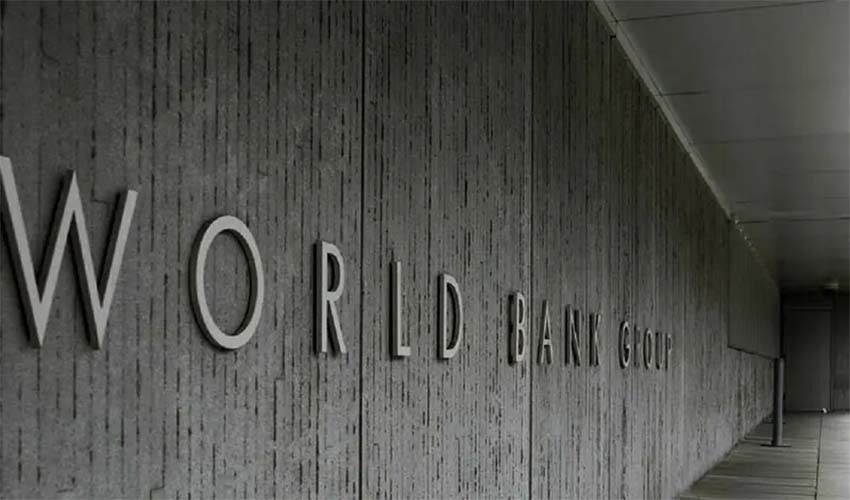
The World Bank has warned that the ongoing Middle East conflict is sending shockwaves through global supply chains, driving up energy and commodity prices while putting mounting pressure on emerging markets.
The institution says it is stepping up support efforts as countries grapple with rising costs and economic uncertainty.
According to the World Bank, regional tensions are severely affecting logistics and disrupting key shipping routes, leading to higher transportation costs.
These disruptions are spreading beyond energy markets into fertilizers and other critical agricultural inputs, highlighting the widening economic impact of the conflict.
The Strait of Hormuz — a vital global oil route — has been effectively disrupted since early March following the US-Israeli offensive on Iran that began on February 28.
Around 20 million barrels of oil typically pass through the strait daily, but its closure has left approximately 1,900 commercial vessels stranded, including tankers carrying nearly 190 million barrels of crude oil.
Sharp rise in global commodity prices
The World Bank noted significant price increases across key commodities in March. Crude oil prices surged by about 40% between February and March, with Brent crude recently trading above $116 per barrel.
Liquefied natural gas (LNG) prices in Asia jumped by nearly two-thirds, while nitrogen-based fertilizer prices rose by around 50%.
These sharp increases are fuelling global inflation fears and raising concerns about food production costs due to higher fertilizer prices.
Emerging markets face growing pressure
The World Bank said the economic ripple effects are placing increasing strain on emerging markets, with a growing sense of risk across these economies.
Several member countries have already reached out to the institution for assistance as they face rising energy costs and supply disruptions.
The bank confirmed it is in direct contact with the most affected countries to better understand on-the-ground challenges.
World Bank prepares support
In response, the World Bank Group said it is ready to provide immediate financial assistance, policy advice, and private sector support to help countries manage the crisis.
“Our aim is to deliver immediate relief by leveraging our active portfolio, our crisis response toolkit, and pre-arranged financing facilities,” the statement said.
The institution plans to use fast-disbursing policy financing instruments to deliver support quickly, similar to the approach used during the COVID-19 pandemic.
Private sector support to aid recovery
The World Bank’s private sector arms will play a key role by providing firms with liquidity, trade finance, and working capital. This support aims to stabilize businesses, safeguard jobs, and maintain economic growth in affected countries.
The bank emphasized that it is working closely with governments, private sector partners, and regional stakeholders to navigate the crisis.
The World Bank said it is continuously monitoring global market developments as the situation evolves. It warned that the longer the conflict persists and the more damage is inflicted on critical infrastructure, the more challenging the recovery will be.
Despite the uncertainty, the institution reaffirmed its commitment to helping countries protect hard-earned economic progress and manage the unfolding crisis.