






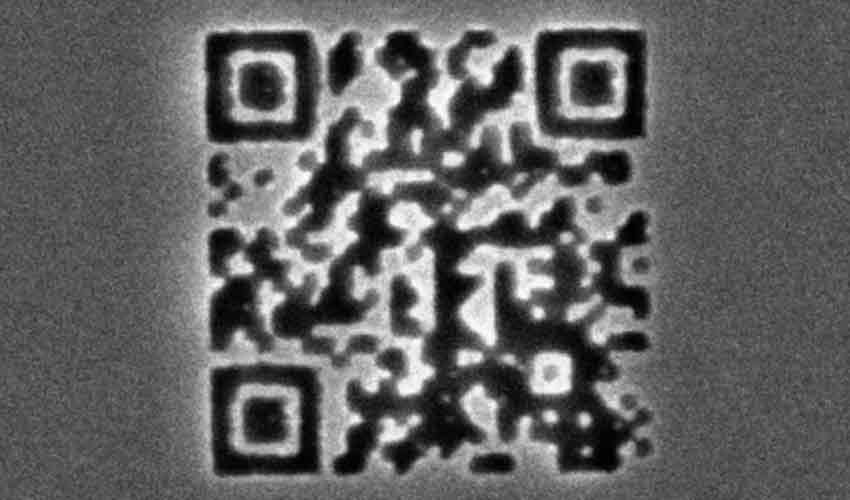
Scientists have developed a QR code smaller than a bacterium, marking a significant breakthrough in micro-scale data storage technology.
A research team from University of Vienna created the tiny QR code by using beams of charged particles to engrave it onto a special type of ceramic material. This material is capable of storing and preserving data for many years while remaining readable.
Spanning an area of just 1.98 square micrometers, the QR code has been officially recognized by Guinness World Records as the smallest of its kind.
Despite its functionality—when scanned, it directs users to the university’s website—the QR code is so small that it cannot be seen under normal light. It can only be viewed using an electron microscope.
Researchers say this innovation could pave the way for advanced data storage solutions and applications in nanotechnology.


.jpg)