




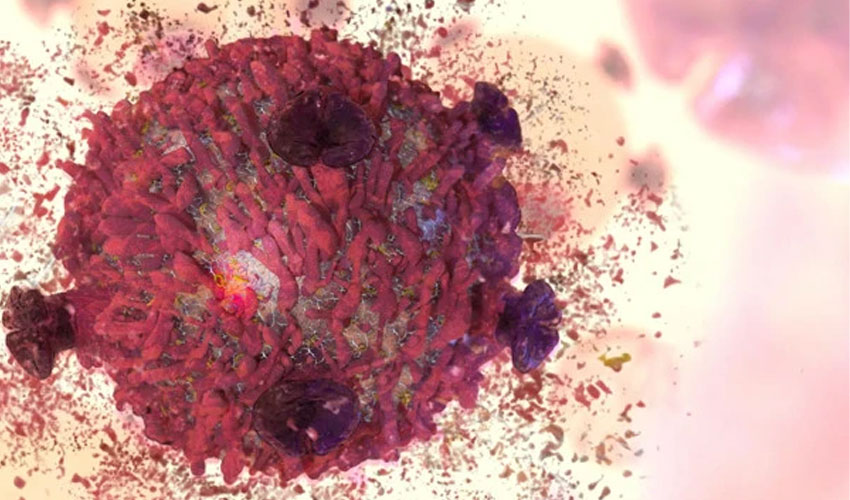
In a breakthrough that could reshape cancer treatment strategies, researchers at Oregon State University have developed a new iron-based nanomaterial that attacks cancer cells from the inside.
The experimental substance triggers two powerful chemical reactions within tumor cells, placing them under extreme oxidative stress while largely protecting surrounding healthy tissue.
The newly developed nanomaterial strengthens the growing field of chemodynamic therapy (CDT), an emerging cancer treatment approach that exploits the unique chemical environment inside tumors.
Unlike healthy tissue, cancer cells tend to be more acidic and contain higher levels of hydrogen peroxide. CDT leverages these differences to generate toxic molecules directly within tumors, minimizing damage elsewhere.
How chemodynamic therapy works
Traditional CDT methods use tumor acidity and hydrogen peroxide to produce hydroxyl radicals — highly reactive molecules made of oxygen and hydrogen with an unpaired electron.
These reactive oxygen species damage cancer cells through oxidation, stripping electrons from critical cellular components such as fats, proteins, and DNA. This internal assault weakens and eventually destroys the tumor cells.
In recent years, CDT techniques have also succeeded in generating singlet oxygen within tumors.
Singlet oxygen is another reactive oxygen species, distinguished by its unique electron spin state, unlike the stable oxygen molecules found in the atmosphere. Like hydroxyl radicals, it disrupts cellular structures and contributes to cancer cell death.
Despite progress, current CDT agents face important limitations. According to researcher Olea Teratola, most available nanoagents are capable of efficiently producing either hydroxyl radicals or singlet oxygen — but not both.
Moreover, their catalytic activity is often insufficient to sustain a high and continuous production of reactive oxygen species. As a result, early studies have frequently shown only partial tumor shrinkage, without delivering lasting therapeutic benefits.
The Iron-based breakthrough
To address these shortcomings, the Oregon State team developed a novel CDT nanoagent constructed from an iron-based metal-organic framework (MOF).
This specially designed structure can simultaneously generate both hydroxyl radicals and singlet oxygen inside tumor cells. By combining these two mechanisms, the nanomaterial significantly enhances its cancer-fighting potential.
Laboratory tests showed that the MOF demonstrated strong toxicity across various cancer cell lines. Importantly, it caused minimal damage to non-cancerous cells, suggesting a more targeted therapeutic effect.