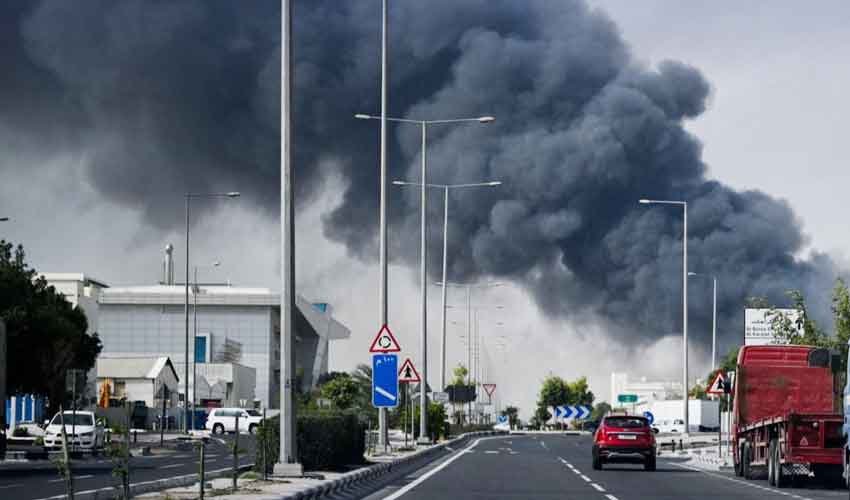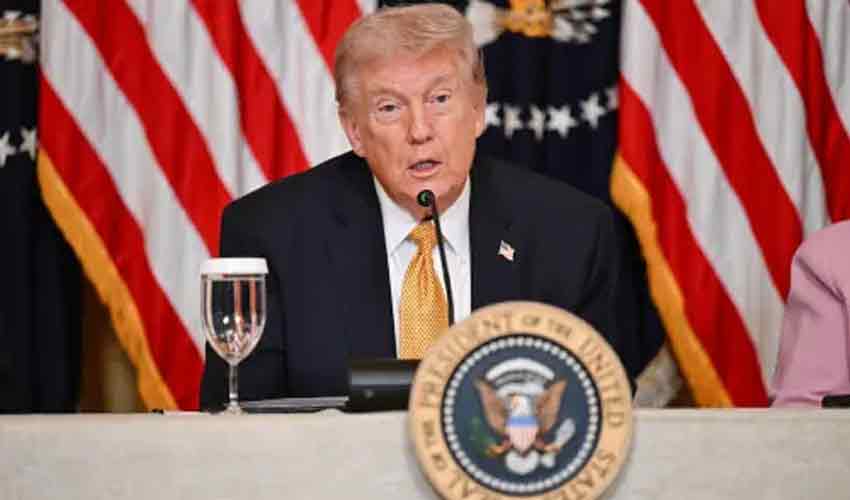





Arab and Islamic countries have strongly condemned Iran’s recent attacks across the region, urging an immediate end to hostilities.
The joint statement came after a high-level consultative meeting in Riyadh, where leaders stressed diplomacy and collective security.
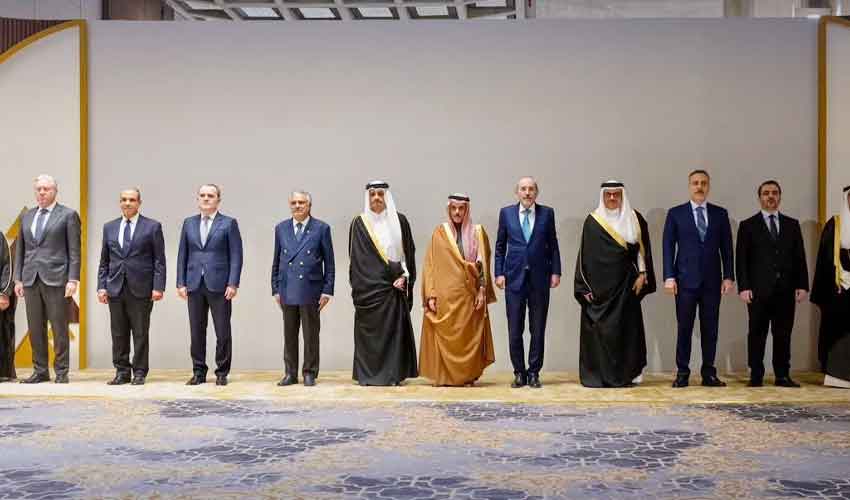
An extraordinary consultative meeting of Arab and Islamic foreign ministers was held in Saudi Arabia’s capital, Riyadh, to address rising regional tensions. Participants strongly condemned Iran’s attacks on Gulf countries, as well as strikes targeting the Gulf Cooperation Council (GCC) states, Jordan, Azerbaijan, and Turkey.
#Riyadh | Foreign Minister HH Prince @FaisalbinFarhan participated in the consultative ministerial meeting with the foreign ministers and representatives of the Republic of Azerbaijan, the Hashemite Kingdom of Jordan, the United Arab Emirates, the Kingdom of Bahrain, the Islamic… pic.twitter.com/bQCkHlRUBK
— Foreign Ministry 🇸🇦 (@KSAmofaEN) March 19, 2026
The ministers denounced the use of ballistic missiles and drones in what they described as deliberate attacks on civilian infrastructure.
According to the joint statement, Iranian strikes hit residential areas and key civilian facilities, including oil installations, desalination plants, airports, embassies, residential buildings, and public places.
The participants emphasized that such attacks cannot be justified under any circumstances or pretext.
Right to self-defense reaffirmed
The ministers reaffirmed that affected countries have the right to defend themselves under Article 51 of the United Nations Charter. They stressed that safeguarding sovereignty and territorial integrity remains a fundamental right of all states in the region.
The meeting called on Iran to immediately cease its attacks and adhere to international law, including international humanitarian law and principles of good neighbourliness.
Participants urged Tehran to respect the sovereignty of neighboring countries and avoid interference in their internal affairs.
Concerns over proxy wars, militias
The joint statement also called on Iran to stop supporting, funding, and arming proxy groups and militias in Arab countries. Ministers warned that such actions serve Iran’s interests while undermining the stability and interests of other nations in the region.
Leaders emphasized the importance of securing vital maritime routes, particularly the Strait of Hormuz and the Bab el-Mandeb Strait. They warned Iran against any actions that could disrupt international navigation or global trade.
Participants stressed the need for Iran to comply with UN Security Council Resolution 2817 (2026) and immediately halt all provocative actions and threats.
They also expressed determination to intensify efforts for a peaceful resolution of the ongoing crisis through diplomacy and negotiations.
Condemnation of Israeli actions
The ministers reaffirmed their support for Lebanon’s sovereignty, stability, and territorial integrity.
They backed the Lebanese government’s decision to restrict weapons to the state and condemned Israel’s aggression against Lebanon and its expansionist policies in the region.
Pakistan calls for diplomacy, end to conflict
Pakistan was represented at the meeting by Foreign Minister Ishaq Dar. He expressed full support for the sovereignty, territorial integrity, and political independence of all brotherly countries in the region.
Dar called for an immediate end to attacks on their territories and reiterated Pakistan’s stance on resolving conflicts through dialogue and diplomacy.
Deputy Prime Minister / Foreign Minister Senator Mohammad Ishaq Dar @MIshaqDar50, arrived in Riyadh to participate in the Consultative Ministerial Meeting of Foreign Ministers from Arab and Islamic countries, hosted by the Saudi Arabia.
— Ministry of Foreign Affairs - Pakistan (@ForeignOfficePk) March 18, 2026
He was received upon arrival by Pakistan’s… pic.twitter.com/L6BwNJiMbr
The meeting, chaired by Saudi Foreign Minister Prince Faisal bin Farhan, was attended by key regional leaders.
Among them were Turkish Foreign Minister Hakan Fidan, Jordanian Deputy Prime Minister and Foreign Minister Ayman Safadi, Azerbaijani Foreign Minister Jeyhun Bayramov, Syrian Foreign Minister Asad Shaibani, and Kuwaiti Foreign Minister Sheikh Jarrah Jaber Al-Ahmad Al-Sabah.
Saudi Arabia’s deputy foreign minister and other senior officials were also present.
The participants reaffirmed their commitment to continued consultation and coordination to monitor developments in the region. They pledged to adopt unified positions and take necessary legitimate measures to protect their security, stability, and sovereignty.
The meeting concluded with a strong resolve to counter Iran’s actions and restore peace in the region.