





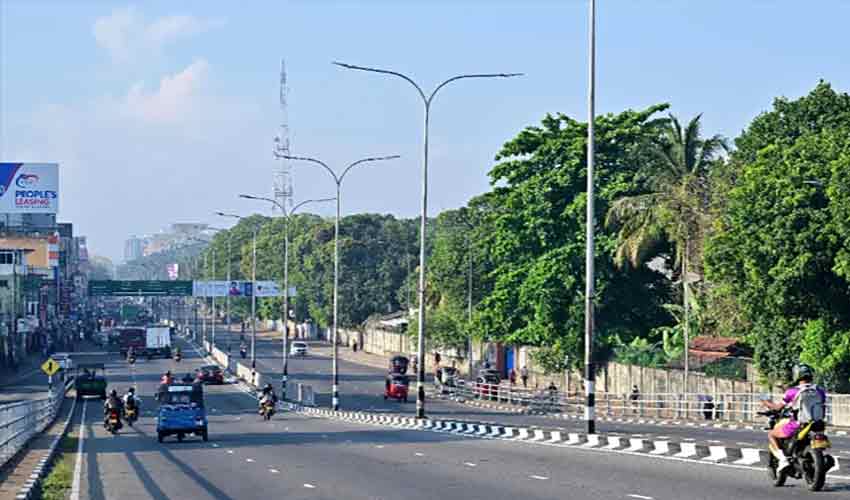
Millions of Sri Lankans took a government-mandated extra day off on Wednesday as the country grapples with an energy crisis worsened by the Middle East conflict. Rail and bus stations were mostly empty, while state offices, schools, and universities shifted to a four-day workweek.
“I am really enjoying the mid-week break because it is a fully paid holiday,” said 40-year-old Prarthana Perera, a housing ministry official. Many government departments in Battaramulla, the main administrative hub of the capital, were closed.
Banks operated on shorter hours, and several private companies introduced work-from-home arrangements, with industry bodies encouraging members to reduce energy consumption.
Sri Lanka has already increased fuel prices by about a third following attacks linked to the U.S. and Israel’s bombing of Iran, which disrupted global energy supplies. Roughly half of the country’s electricity is generated using coal and diesel.
To cut electricity consumption by 25 percent, the cabinet has ordered street lamps to be switched off and asked civil servants to use table fans instead of air conditioners.
While some welcomed the day off, opinions on its effectiveness were mixed. Shipping executive Varuna Perera said it would provide only a short-term reprieve. Environmental lawyer Ravindranath Dabare noted that essential services like hospitals cannot close, limiting the measure’s overall impact.
The Chamber of Commerce encouraged businesses to follow government guidelines and adopt remote work where feasible. Sri Lanka’s leading tech firm WSO2 made working from home mandatory on Tuesdays and Thursdays for its 500 employees.
Media Minister Nalinda Jayatissa said the government would monitor the impact but expected widespread compliance. Meanwhile, President Anura Kumara Dissanayake advised electric vehicle owners to charge cars during the day when solar power is abundant, rather than overnight, to ease grid pressure.
Officials reported that diesel supplies could last until mid-May, with petrol stocks slightly longer. The government is also seeking oil imports from Russia and hopes to source crude oil from Iran.
Political commentator Kusal Perera said the crisis could be an opportunity to improve public-sector productivity. “This is a chance for a national dialogue on efficiency in the state sector,” he said.