





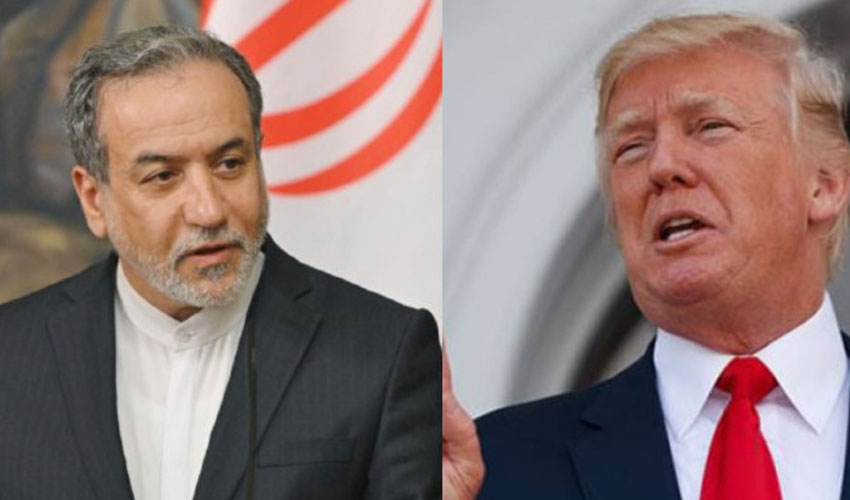
US President Donald Trump has claimed that Iran is secretly negotiating with Washington but is “afraid” to admit it, even as Tehran firmly denies any intention to negotiate.
The comments come amid escalating military deployments in the Gulf and mounting uncertainty over the conflict’s trajectory.
Speaking at a Republican congressional dinner, Mr Trump insisted that Iranian negotiators want a deal but fear retaliation from their own leadership.
“They are negotiating, by the way, and they want to make a deal so badly. But they're afraid to say it, because they figure they'll be killed by their own people,” Trump said, adding, “They're also afraid they'll be killed by us.”
Trump described Iran as being “decimated” in the conflict, now in its fourth week, despite Tehran maintaining control over the strategic Strait of Hormuz.
Iranian denial of negotiations
Iranian Foreign Minister Abbas Araghchi directly contradicted Trump, stating that the Islamic Republic has “no intention of negotiating for now.”
Speaking on state television, Araghchi said messages from the US had been “conveyed via friendly countries,” but stressed that Iran’s responses were strictly defensive. “This is neither dialogue nor negotiation, nor anything of the sort,” he added.
He also framed the conflict as part of Israel’s war, with civilians in the region and in the US paying the price.
US military buildup in the Gulf
The White House is moving thousands of additional troops to the Gulf, including airborne units and marines, amid speculation that Trump might authorize a ground invasion to secure Iranian oil assets or protect the Strait of Hormuz.
Press Secretary Karoline Leavitt emphasized that the US could “unleash hell” if Iran fails to admit defeat, while asserting that “talks continue” and are “productive.” She declined to confirm which Iranian officials were engaged in communications with Washington, though reports suggest involvement by Mohammad Bagher Ghalibaf, Iran’s parliamentary speaker.
Trump criticized Democrats for avoiding the term “war” and for urging congressional approval of US military actions. He referred to the ongoing operations as a “military operation” rather than war.
He also postponed a visit to China to meet Xi Jinping, citing the conflict, and reiterated the US timeline of four to six weeks for the military operation.
Regional mediation
Reports indicate that some US-Iran communications may be mediated via Pakistan, though officials have not confirmed upcoming meetings involving Vice President JD Vance or other top US officials.
Despite Trump’s assertions, Tehran remains resolute, framing US overtures as mischaracterized and reaffirming a defensive stance.