





Donald Trump is moving to bring Silicon Valley closer to policymaking, announcing plans to appoint leading tech figures to a key advisory panel on artificial intelligence and emerging technologies.
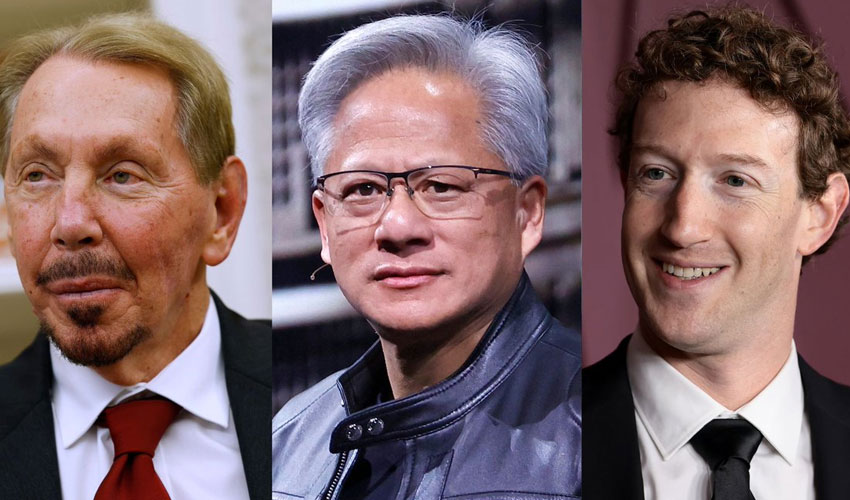
The White House confirmed that Mark Zuckerberg, Larry Ellison, and Jensen Huang will be part of a new technology advisory panel.
The council will focus on shaping US policy around artificial intelligence and other critical technology issues, signaling a closer alignment between the government and major tech companies.
The panel, formally known as the President's Council of Advisors on Science and Technology (PCAST), will initially include 13 members from the tech industry.
Among them are Sergey Brin and Lisa Su, adding further weight to the council’s expertise in software, semiconductors, and AI research.
Under an executive order issued in January 2025, the council can expand to a maximum of 24 members.
Focus on AI and global competition
The formation of the council underscores the administration’s push to secure US leadership in artificial intelligence, particularly amid rising competition from China.
Artificial intelligence has become a central priority in Trump’s second term, with federal agencies already directed to prepare an AI Action Plan aimed at reducing regulatory barriers and boosting private-sector innovation.
The council is expected to play a key role in shaping Washington’s response to intensifying global AI competition and guiding long-term technology development and regulation.
The advisory body will be co-chaired by David Sacks and Michael Kratsios.
Ellison and Huang will join Zuckerberg in leading discussions, bringing expertise across software, semiconductors, and artificial intelligence.
The White House said the council’s mission is to help safeguard US technological leadership amid rapid advancements.
Industry response
Zuckerberg and Nvidia have expressed support for the initiative, saying the council could strengthen the United States’ position in AI.
Other members, including Bob Mumgaard, highlight the administration’s broader interest in emerging technologies like fusion energy.
Artificial intelligence continues to drive massive investment across the US, with companies pledging trillions of dollars in spending as the government accelerates efforts to expand the sector.