






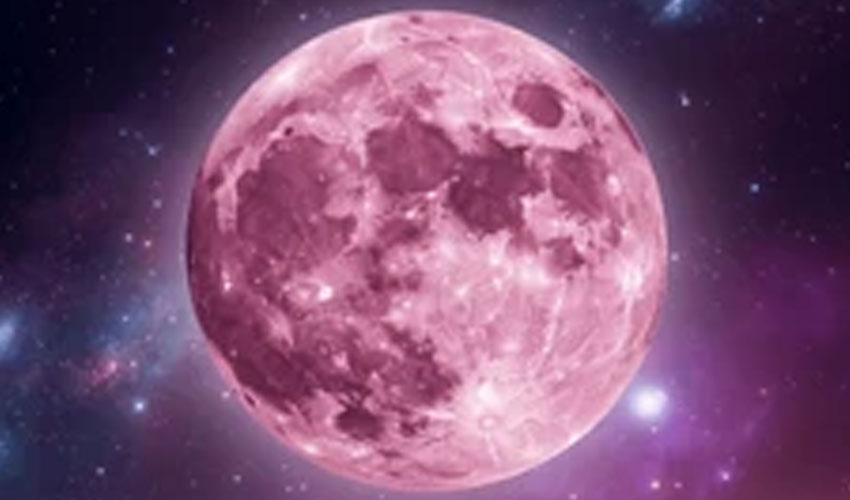
Astronomy enthusiasts have a treat coming up as April’s full Pink Moon reaches its peak in the UK at 3:12 BST on Thursday, 2 April 2026.
Despite its name, the moon will likely appear orange rather than pink, offering a spectacular sight in the spring night sky.
What is pink moon?
The April full moon is traditionally called the Pink Moon, named after the pink wildflower, moss phlox, that blooms in North America during spring. It does not appear pink in color, but rising on the evening of 1 April, the moon can look orange.
This effect occurs because sunlight passes through a denser layer of the Earth’s atmosphere at moonrise, scattering blue and violet light and leaving only warmer, redder tones.
Historical and seasonal significance
The Pink Moon has long been used to track seasonal changes. Globally, it’s also known as the Sprouting Grass Moon, Egg Moon, Fish Moon, or Breaking Ice Moon, all signaling the arrival of spring.
The date of Easter is tied to the lunar cycle, falling on the first Sunday after the first full moon following the spring equinox. While the astronomical equinox can vary between 20 and 21 March, the Christian Church uses 21 March as a fixed reference, leading to variations in Easter celebrations worldwide.
A cold front is expected to bring clouds and rain to England and Wales on the night of 1 April, which may obscure the moon. Skywatchers in Scotland and Northern Ireland are predicted to have the clearest skies, with colder air offering ideal viewing conditions.
This lunar event also highlights how other calendars, like the Jewish calendar, rely on lunar cycles, marking months from the new moon and placing the full moon at the midpoint.



.jpg)