





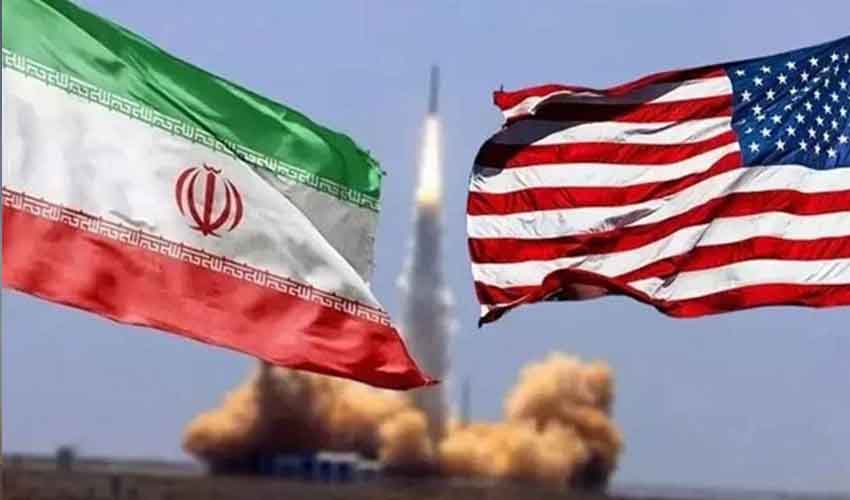
Amid rising tensions in the Middle East, fresh diplomatic efforts are underway to prevent further escalation between the United States and Iran.
Reports suggest multiple countries, including Turkey, Egypt, and Pakistan, are quietly working behind the scenes to mediate. However, conflicting narratives from Iran and Washington are adding uncertainty to the situation.
An Axios reporter revealed that senior officials from Turkey, Egypt, and Pakistan held separate talks with US envoy Steve Witkoff and Iranian Foreign Minister Abbas Araqchi.
According to the report, these countries have been actively passing messages between the United States and Iran over the past two days in an attempt to de-escalate the ongoing crisis.
Separately, Reuters also reported that Turkey, Egypt, and Pakistan engaged in similar diplomatic outreach. The talks reportedly included key figures such as Jared Kushner and Witkoff, with the aim of easing tensions in the region.
Iran denies talks, signals mixed messaging
Despite these reports, Iran’s state-linked Fars News Agency cited a source denying any direct or indirect communication with the United States.
Other Iranian outlets presented varying perspectives. Tasnim News Agency reported that no negotiations were underway and that the Strait of Hormuz would not return to pre-war conditions. It also claimed that US President Donald Trump had backed down from targeting Iranian infrastructure due to pressure from financial markets.
Also Read: Tehran refuses to back down as Hormuz remains global pain point
Tasnim further warned that Iran would continue defending itself until it achieves deterrence.
Meanwhile, Mehr News Agency, citing Iran’s foreign ministry, acknowledged that initiatives to reduce tensions do exist. However, it stressed that Washington should take the lead in negotiations, as Iran did not initiate the conflict.
Mehr also suggested that Trump’s recent remarks were aimed at lowering energy prices and buying time for potential military planning.
Trump postpones strikes after 'productive' talks
In a significant development, Trump announced that he had ordered a five-day postponement of planned military strikes on Iranian power plants.
Posting on Truth Social, Trump said the decision followed “VERY GOOD AND PRODUCTIVE” conversations with Iran over the past two days, raising hopes for a “complete and total resolution of hostilities in the Middle East.”
The announcement came just hours before a critical deadline that could have escalated the conflict further, now in its fourth week.
Earlier, Trump had warned that Iranian power plants would be destroyed if Tehran failed to fully reopen the Strait of Hormuz within 48 hours. The deadline was set for Monday evening.
Also Read: Iran warns of decisive response to threats
In response, Iran’s Revolutionary Guards threatened retaliation, stating they would target Israel’s power infrastructure and facilities supplying US bases across the Gulf if attacks were carried out.
These escalating threats have raised concerns over potential disruptions to electricity grids and desalination plants, which are critical for drinking water in the region.
Oil markets react
The uncertainty surrounding the crisis has already impacted global markets. Brent crude oil prices dropped by around 7%, trading near $104 as of 1127 GMT.
The earlier threat of attacks on Gulf energy infrastructure had rattled markets, but signs of possible de-escalation appear to have eased some immediate concerns.
While Trump insists that constructive dialogue is underway, Iranian media continues to deny any formal engagement with Washington.
At the same time, reports of indirect mediation by regional players suggest that backchannel diplomacy may be playing a critical role in preventing further escalation.
The situation remains fluid, with diplomacy, military threats, and market reactions all shaping the next phase of the crisis.